2026 Top Office Ergonomics Lighting Solutions for Better Health?

Time:2026-06-13 Author:Madeline
0%

In the quest for improved workspace health, **Lighting For Office Ergonomics** emerges as a crucial element. Studies reveal that over 60% of office workers report visual discomfort due to inadequate lighting. This discomfort can hinder productivity and overall well-being. In fact, proper lighting not only enhances visibility but also impacts mood and energy levels.

Industry expert Dr. Emily Hart emphasizes this connection, stating, "Effective lighting is fundamental for creating a comfortable and efficient work environment." Her insights reflect growing research that highlights the psychological effects of lighting. According to a 2022 report by the International Ergonomics Association, optimal lighting can boost workplace productivity by up to 20%.

However, many organizations overlook lighting design, leading to challenges such as glare and eye strain. It's time for businesses to reevaluate their lighting strategies. Simple adjustments can make a significant difference in employee satisfaction and health. As we move toward 2026, embracing modern lighting solutions will be essential for fostering a healthier office environment.
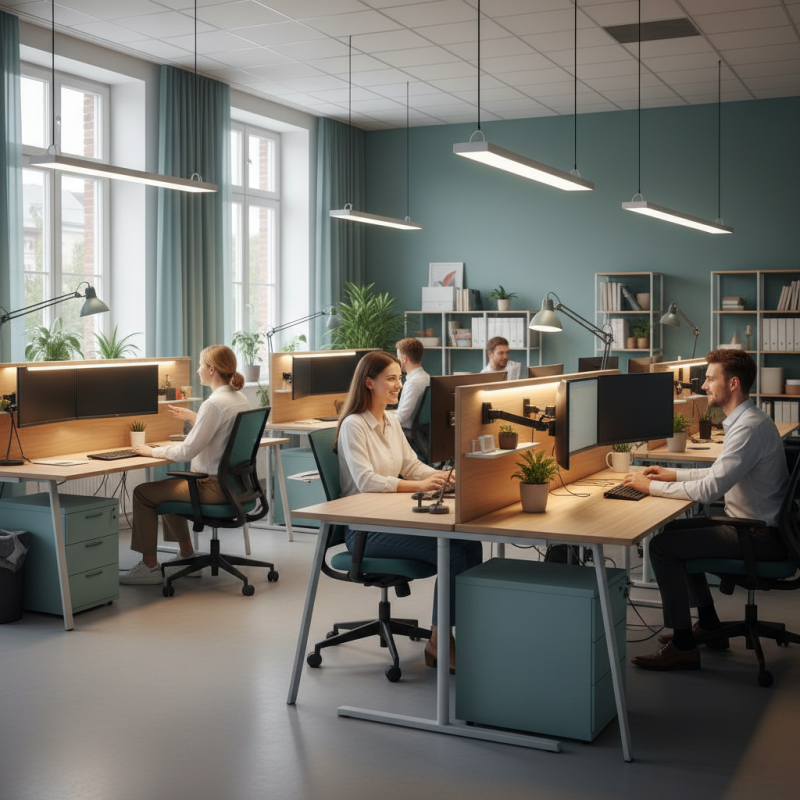
2026 Top Office Ergonomics Lighting Solutions for Better Health?

2026 Trends in Office Ergonomics and Lighting Solutions

As workplace design evolves, 2026 brings significant trends in office ergonomics and lighting solutions. Research indicates that proper lighting can reduce eye strain by up to 20%. This is crucial, as employees spend an average of 8 hours a day in front of screens. Natural light remains a priority, with studies showing that access to daylight can enhance mood and productivity by 15%. Offices that incorporate large windows and skylights promote well-being.

However, there are challenges. Not every workspace allows for ample natural light. Artificial lighting systems must mimic natural conditions to mitigate this. Experts suggest using adjustable LED lighting that can change intensity based on the time of day. This flexibility supports circadian rhythms, potentially boosting overall employee health. Yet, the implementation of these solutions requires careful planning and investment, which not all companies are prepared for.

Furthermore, a one-size-fits-all approach does not work in office ergonomics. While standard recommendations exist, individual needs vary widely. Some employees may need standing desks or specialized lighting to perform efficiently. Collecting feedback from staff can lead to better solutions. It is essential to continuously assess the office environment and adapt it based on evolving trends and employee requirements.

2026 Top Office Ergonomics Lighting Solutions for Better Health

Impact of Lighting on Workplace Health and Productivity

The impact of lighting on workplace health and productivity is profound. Research shows that adequate lighting can elevate mood and enhance focus. A study by the American Society of Interior Designers found that well-lit workspaces can improve employee productivity by up to 20%. Poor lighting, on the other hand, leads to eye strain and headaches, resulting in decreased work efficiency.

Natural light plays a crucial role in employee well-being. Exposure to daylight has been linked to better sleep patterns and overall health. Employees who work in offices with abundant natural light report a 15% increase in well-being. However, many workplaces still rely on artificial lighting, which can create fatigue and distraction.

The choice of lighting can affect energy levels. Bright, cool light can invigorate, while warmer tones promote relaxation. A Harvard study revealed that lighting adjustments can lead to a 6% increase in productivity. Yet, many organizations overlook the importance of customized lighting solutions, missing out on the potential improvements in employee engagement and performance.

Choosing the Right Ergonomic Lighting Fixtures

Choosing the right ergonomic lighting fixtures can greatly enhance workplace health. Proper lighting reduces eye strain and improves focus. Soft, diffused light minimizes glare. It also prevents headaches and fatigue, contributing to a more productive environment.


Consider the color temperature of your lights. Warm tones are soothing while cool tones increase alertness. Many offices use a mix of both, depending on the time of day. Adjustable lighting options can cater to individual preferences. This flexibility allows employees to optimize their workspaces.


However, not every setup is perfect. Some may find certain lights too harsh, while others might prefer dimmer options. It’s important to assess personal comfort. Regular feedback can lead to improvements. Evaluating how lighting affects productivity gives insight into needed changes. Balancing aesthetics with health needs often requires trial and error.

Innovative Technologies in Ergonomic Office Lighting

The evolution of ergonomic office lighting continues to shape our work environments. Innovative technologies are emerging, enhancing not only comfort but also productivity. Smart lighting systems, for instance, adapt to natural light changes throughout the day. These solutions can reduce eye strain and improve focus.

Recent studies link proper lighting to better mental health and well-being. Adjustable LED lights allow users to customize brightness and color temperature. This personalization caters to individual preferences and tasks. However, it's important to recognize that what works for one person may not work for another.

Another interesting trend is the integration of circadian rhythm principles into office lighting. This approach supports our internal clocks and boosts energy levels. Nevertheless, the implementation of such systems can be complex. Organizations must carefully consider their needs and the potential impacts on employees. The goal is to create a harmonious balance between technology and human experience.

2026 Top Office Ergonomics Lighting Solutions for Better Health

Lighting Type Features Health Benefits Energy Efficiency Average Cost
LED Panel Lights Flicker-free, adjustable brightness, slim design Reduces eye strain, improves focus 80% more efficient than traditional bulbs $50 - $150 per panel
Task Lighting Adjustable arms, directional lighting, various color temperatures Enhances task performance, minimizes glare Varies based on bulb type, generally energy-efficient $30 - $120 per unit
Smart Lighting Systems Remote control, scheduling features, energy monitoring Circadian rhythm support, customizable ambiance Optimal efficiency through automated adjustments $100 - $300 per system
Natural Light Simulation Dynamic color temperature, mimics daylight Boosts mood, enhances productivity Highly efficient LED technology $150 - $400 depending on features

Best Practices for Implementing Ergonomic Lighting in Workspaces

In modern workspaces, ergonomic lighting plays a vital role in promoting health and productivity. Poor lighting can lead to eye strain and fatigue. It's crucial to choose light sources that reduce glare and provide adequate brightness. Natural light is ideal, yet often limited in office layouts. Utilizing full-spectrum bulbs can mimic daylight, fostering a more energetic atmosphere.

Implementing a variety of light levels is essential. Task lighting should be adjustable. This allows employees to customize their environment according to their needs. For instance, desk lamps can offer focused light while overhead lighting provides general illumination. However, many companies overlook individual preferences, leading to discomfort and decreased efficiency.

Regular assessments of lighting quality can enhance workspace ergonomics. Gather employee feedback frequently. Adjustments based on their input can make a significant difference. A one-size-fits-all approach may not work. Strive for an adaptable lighting plan that evolves with the workforce's needs, ensuring a healthier, more engaged office environment.

FAQS

: How does proper lighting impact employee health?

: Proper lighting can reduce eye strain by up to 20% and enhance overall well-being.

What role does natural light play in the workplace?

Natural light improves mood and productivity, with a reported 15% increase in employee well-being.

What are the benefits of adjustable LED lighting?

Adjustable LED lighting can mimic natural light, supports circadian rhythms, and boosts health.

Why is a one-size-fits-all approach ineffective in ergonomics?

Each employee has unique needs, such as standing desks or specific lighting conditions.

How can organizations assess their lighting needs?

Collecting continuous feedback from staff helps adapt lighting for better productivity and comfort.

What should be considered when choosing lighting fixtures?

Color temperature and softness are crucial; warm tones soothe, while cool tones enhance alertness.

What issues can arise from poor lighting in workplaces?

Poor lighting can lead to fatigue, distraction, and decreased work efficiency.

How can lighting adjustments affect productivity?

Adjustments can lead to up to a 6% increase in productivity, enhancing overall workplace engagement.

What are common challenges with lighting in offices?

Not all workspaces allow for ample natural light, affecting comfort and well-being.

Why is regular evaluation of lighting necessary?

Regular assessments can reveal how lighting influences productivity and help implement necessary changes.

Conclusion

The article titled "2026 Top Office Ergonomics Lighting Solutions for Better Health?" explores the essential role of lighting in enhancing workplace health and productivity. As businesses increasingly focus on employee well-being, understanding the trends in office ergonomics is crucial. The significance of "Lighting For Office Ergonomics" is highlighted, emphasizing how proper lighting can reduce eye strain, improve mood, and boost overall productivity.

Furthermore, the article provides insights into choosing the right ergonomic lighting fixtures and innovative technologies that can create a more conducive working environment. By implementing best practices for ergonomic lighting, organizations can ensure that their workspaces are not only efficient but also supportive of their employees' health. In 2026, prioritizing ergonomic lighting solutions will be essential for fostering healthier work environments.

Madeline

Madeline

Madeline is a dedicated marketing professional with a wealth of expertise in our company's core offerings. With a keen understanding of the industry, she brings a unique perspective to her role, consistently delivering high-quality content that highlights the superior aspects of our products. As......