Choosing lighting for 2026 will require more than comparing lumen output and purchase prices. Future Trends In Lighting Technology now connects energy efficiency, human wellbeing, automation, circular design, and building data.
The International Energy Agency reports that lighting uses about 15% of global electricity. Its energy-efficiency analysis also identifies LEDs as a major opportunity for reducing demand. However, replacing lamps alone does not guarantee meaningful savings. Controls, occupancy patterns, maintenance, and commissioning can change real performance.
Look beyond the brochure.
The U.S. Department of Energy’s solid-state lighting research highlights continuing progress in efficacy, controls, connected systems, and improved color quality. These developments may support offices, hospitals, warehouses, retail spaces, and homes differently. A sensor network that performs well in a warehouse could feel intrusive in a bedroom.
Health considerations are becoming equally important. Dr. Mariana Figueiro, director of the Light and Health Research Center, has stated, “Light is the strongest synchronizer of the circadian system.” Her work underlines the importance of timing, spectrum, intensity, and exposure duration, rather than brightness alone.
The evidence is promising, but not perfect.
Manufacturers sometimes present laboratory results as everyday performance. Real projects face glare, dusty fixtures, incompatible controls, limited budgets, and user resistance. Therefore, this guide examines measurable efficiency, visual comfort, interoperability, repairability, cybersecurity, and lifecycle value. It also questions a common assumption: newer technology is not automatically better. The best 2026 solution may be a carefully designed retrofit, not the most advanced connected system.
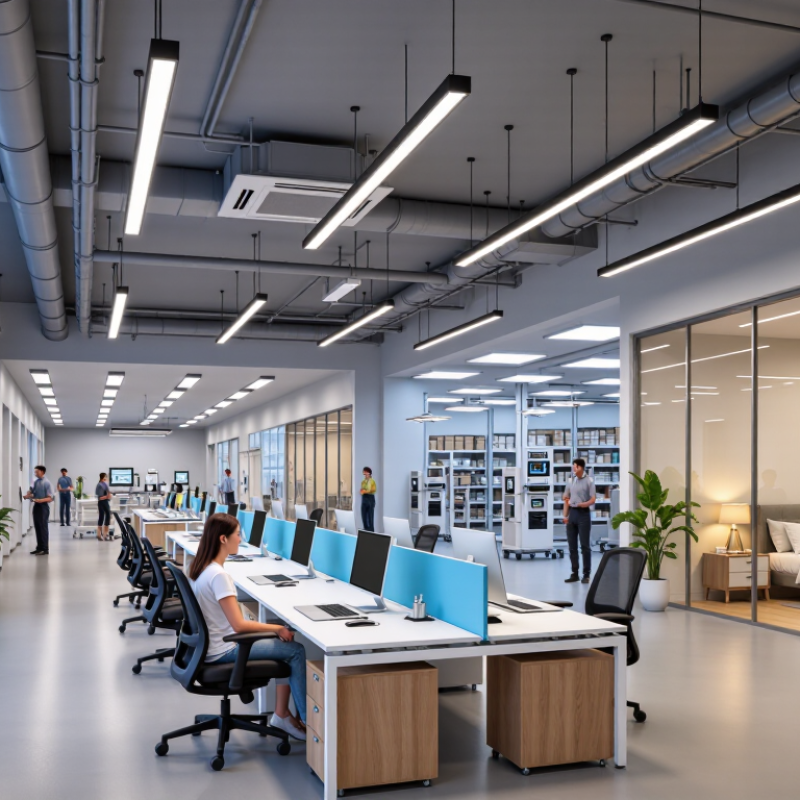
Future lighting technology is not one single category. It includes adaptive LED systems, OLED panels, human-centric lighting, connected lighting, and solar-powered solutions. Adaptive LEDs adjust brightness, color temperature, and timing through sensors or software. OLED panels create soft, low-glare light across thin surfaces, making them useful for walls, ceilings, and furniture. They usually offer less intense output, however.
Human-centric lighting changes throughout the day. Cooler light can support alertness in the morning, while warmer light may feel calmer at night. Connected lighting adds occupancy sensors, remote controls, and energy monitoring.
Li-Fi may also transmit data through light, but room layout and receiver position can limit performance. Solar and daylight-harvesting systems reduce grid demand, yet cloudy weather still creates uncertainty.
These technologies sound impressive. Real rooms remain complicated.
Tips: Check flicker, color-rendering quality, heat control, repair options, and measured energy use. Do not trust brightness claims alone. Test the light beside a desk, not only in a showroom. Review compatibility with existing wiring and control systems. Ask for independent test results when possible. A lighting plan should also consider glare, eye comfort, maintenance access, and recycling. I would leave room for revision, because software features and efficiency figures can change faster than building habits.
How to Choose Future Lighting Technology in 2026?
Choosing future lighting technology requires more than checking the lowest energy rating. Compare useful light, not only wattage. A fixture producing 150 lumens per watt may still disappoint if glare reduces workplace comfort. Review color accuracy, flicker control, beam distribution, and dimming performance. These details affect productivity, safety, and user acceptance.
Operating costs tell a fuller story. Calculate electricity use, replacement frequency, cleaning needs, controls, and installation labor. Adaptive controls, occupancy sensors, and daylight harvesting can reduce wasted energy in empty rooms. However, complicated systems may require training and occasional technical support. Field audits often reveal that poor settings create higher costs than expected. A perfect forecast is impossible.
Tips: Request measured photometric data, not vague efficiency claims. Compare total cost over ten years. Test one area before upgrading an entire building. Check performance at low dimming levels and during power fluctuations. Keep maintenance records, including lamp failures, sensor faults, and monthly kilowatt-hours. An attractive payback estimate can change when labor prices rise. That deserves honest review.
| Lighting Technology | Typical System Efficacy | Annual Energy Use* | Annual Electricity Cost* | Useful Life | Color Quality | Dimming and Controls | Thermal and Optical Performance | 2026 Readiness | Best-Fit Applications |
|---|---|---|---|---|---|---|---|---|---|
| High-Efficiency LED | 130–180 lm/W | 222–308 kWh | $33–$46 | 50,000–100,000 hours | CRI typically 80–95; wide color-temperature range | Excellent; compatible with 0–10 V, DALI, wireless, occupancy, and daylight controls | Strong optical control and good heat management when properly designed | Mature | Offices, warehouses, retail, roads, schools, and large commercial upgrades |
| Tunable-White LED | 90–150 lm/W | 267–444 kWh | $40–$67 | 40,000–80,000 hours | CRI typically 80–95; adjustable from warm to cool white | Excellent; supports scheduling, circadian-oriented scenes, sensors, and building-management systems | Good performance, but output and efficacy can decrease at extreme color settings | Mature and expanding | Healthcare, education, hospitality, offices, and human-centric lighting projects |
| Laser-Phosphor Lighting | 100–150 lm/W | 267–400 kWh | $40–$60 | 30,000–60,000 hours | CRI commonly 70–90, depending on phosphor design | Good, although fixture and control compatibility varies | Very high brightness and long-distance optical delivery; thermal design is important | Niche commercial | High-bay spaces, long-throw lighting, specialized industrial, and architectural applications |
| OLED Lighting | 60–100 lm/W | 400–667 kWh | $60–$100 | 20,000–50,000 hours | CRI commonly 90 or higher; naturally soft and uniform light | Good, but driver and fixture integration can limit options | Low glare, thin form factor, and broad-area illumination; lower output density than LED | Specialty | Decorative, hospitality, premium interiors, furniture, and low-glare installations |
| MicroLED-Based General Lighting | 130–200 lm/W potential range | 200–308 kWh | $30–$46 | 50,000–100,000 hours projected | Potentially excellent color control; commercial specifications remain less standardized | Potentially excellent, subject to control-system availability | High brightness and precise control potential; manufacturing scale and thermal design remain challenges | Emerging | Research projects, premium displays, and selected specialty applications |
In 2026, lighting selection will depend on more than lumen output. Smart controls, connectivity, and automation should receive equal attention. The International Energy Agency reported in Energy Efficiency 2023 that buildings consume about 30% of global final energy. This makes controllable lighting a practical efficiency measure, not a decorative upgrade.
Start with the room. Occupancy sensors should respond to real movement, not switch lights off during quiet work. Daylight sensors can dim fixtures near windows while maintaining comfortable task visibility. The U.S. Department of Energy reports that advanced lighting controls can reduce lighting energy use substantially, with savings depending on building type, schedules, and commissioning quality. Ask whether controls support open communication protocols and secure software updates. Closed systems may create expensive replacement problems later.
Connectivity needs a clear purpose. A central dashboard can reveal failed sensors, unusual runtime, and rising energy use. Automation should also connect lighting with scheduling and building management systems. However, perfect automation is unrealistic. Sensors drift. Networks drop. Staff override settings. Plan manual controls and local operation. Test failure modes. An experienced installer should measure actual occupancy patterns for several weeks before final programming. The International Energy Agency’s Digitalisation and Energy Tracking report also highlights the value of connected data, but data alone does not guarantee savings. Poor commissioning can undermine a sophisticated installation.
Evaluate Safety, Sustainability, and Installation Requirements
When choosing future lighting technology in 2026, safety should guide every technical decision. Start with the installation site, not the product brochure. Measure ceiling height, moisture exposure, heat, vibration, and available wiring. An experienced installer will check emergency access, circuit loads, glare, and maintenance reach. Small details matter. An enclosed fitting near steam needs suitable ingress protection and heat management. Poorly planned brightness can create shadows on stairs or reflections on screens. These risks are easy to miss during a showroom demonstration.
Sustainability requires more than low energy consumption. Compare expected service life, repair options, material content, and replacement frequency. A highly efficient unit may still create waste if its control gear cannot be replaced. Ask for measurable performance data, including energy use, light output, colour stability, and operating temperature. Life-cycle information is often incomplete. That should prompt careful questions, not automatic rejection. Select lighting that supports dimming, occupancy control, and daylight response where these features genuinely reduce consumption.
Installation requirements can determine whether a promising system becomes practical. Check compatibility with existing circuits, sensors, drivers, mounting points, and control software. Confirm who will commission the system and document future maintenance procedures. Applicable electrical and building codes must be verified by qualified professionals. In practice, retrofit plans are rarely perfect. A rushed installation can damage ceilings, increase glare, or leave staff without clear instructions. Allow time for testing at night, when shadows and reflections become more obvious.
Selecting the best lighting solution starts with the application, not the fixture’s appearance. A warehouse needs uniform illumination, low glare, and reliable performance during long operating hours. A hotel lobby needs warmer tones, smooth dimming, and careful control of shadows. Offices require comfortable brightness, reduced screen reflections, and sensors that respond without distracting occupants. Different spaces demand different evidence.
Review photometric files, color consistency, glare ratings, and tested lifetime data before purchasing. For retail areas, high color rendering can protect the appearance of fabrics, food, and product packaging. In schools, flicker performance and visual comfort deserve close attention. Outdoor pathways need weather resistance, controlled light distribution, and safe visibility after rain. Always check local electrical and energy requirements.
Controls can improve efficiency, but complicated systems often fail during daily use. Keep interfaces practical. In my project experience, installers and facility teams should test a sample area before full deployment. A small mock-up can reveal harsh shadows, unexpected reflections, or poor sensor placement. Specifications alone may not show these problems. Future-ready lighting should also allow maintenance access, component replacement, and software updates without major disruption. I still question overly precise energy forecasts, because real behavior changes after occupancy. The best decision combines measured performance, user feedback, lifecycle cost, and honest limits.
Measure ceiling height, moisture, heat, vibration, wiring, circuit loads, and maintenance access. Start with the site, not the brochure.
Use suitable ingress protection in damp areas. Check glare, emergency access, shadows on stairs, and screen reflections.
Review service life, repair options, material content, and replacement frequency. Efficient lighting can still create waste if parts cannot be replaced.
Ask for energy use, light output, colour stability, flicker performance, operating temperature, and tested lifetime data. Missing data deserves questions.
Warehouses need uniform, low-glare illumination. Offices need comfortable brightness and reduced reflections. Lobbies often suit warmer tones and smooth dimming.
Install a small mock-up first. Test it at night, when shadows, reflections, and sensor problems become easier to see.
Dimming, occupancy detection, and daylight response can reduce consumption. Complicated controls may frustrate staff and fail during everyday use.
Check circuits, sensors, drivers, mounting points, control software, and maintenance procedures. Rushed work can damage ceilings and leave unclear instructions.
Forecasts can be wrong. Occupants change habits after installation, so measured use and user feedback should guide later decisions.
It should support maintenance access, component replacement, software updates, and practical controls. Perfect planning is unlikely, so allow room for adjustment.
Choosing the right lighting technology in 2026 requires a balanced review of performance, efficiency, intelligence, and long-term value. Future lighting options may include advanced LED systems, connected lighting, adaptive controls, human-centered solutions, and emerging low-energy technologies. Each type should be compared according to energy consumption, light quality, lifespan, maintenance needs, and total operating costs rather than initial price alone. Future Trends In Lighting Technology are increasingly focused on automation, sensor-based adjustment, wireless connectivity, and data-driven energy management.
Safety, sustainability, and installation requirements are equally important when selecting a solution. Buyers should assess material durability, heat management, recyclability, compatibility with existing electrical systems, and ease of maintenance. Offices may benefit from automated, comfortable lighting, while industrial areas require robust illumination and reliable control. Homes, retail spaces, public facilities, and outdoor environments each demand different levels of brightness, flexibility, and environmental resistance. The best choice is therefore the system that matches the application, supports efficient operation, and remains adaptable to future needs.

Boffo Lights