How to Choose Modern Lighting Trends for Your Home?

Time:2026-11-26 Author:Amelia
0%

Modern Lighting Trends For Homes are not just about choosing a striking pendant or following the latest finish. Good lighting should make everyday tasks easier, flatter the room, and feel comfortable after dark. A sculptural fixture above a dining table may look impressive, yet cast harsh shadows across dinner. Details matter.

This guide explores how to choose contemporary lighting that suits your home, from layered ambient, task, and accent light to energy-conscious LEDs, dimmers, and adaptable fixtures. Consider the room’s size, ceiling height, natural light, and the activities that happen there. A warm bedside lamp serves a different purpose than a bright kitchen work light. That sounds obvious, but it is easy to overlook when shopping from a product photo. Bulb color also affects how paint, wood, and fabrics appear. A cooler tone may feel crisp in a workspace, while softer light can make a living room more restful.

Start with how you want a space to feel, then check practical details such as bulb compatibility, light output, installation needs, and maintenance. Adjustable brightness can help one room shift from focused work to a quieter evening. Before buying, measure the intended location and note nearby windows, doors, and furniture. A fixture that fits the room visually may still hang too low or leave a dark corner.

Not every trend deserves a place in every home. Some designs age quickly, and even thoughtful plans can miss how a fixture looks once installed. Use these ideas as a guide, test lighting where possible, and choose pieces that support real routines—not just a polished image.

How to Choose Modern Lighting Trends for Your Home?

Assess Each Room’s Lighting Needs and Existing Conditions

Before choosing fixtures, map what each room actually needs. In a kitchen, note shadows across the counter; in a bedroom, check whether bedside reading creates glare. Observe daylight in the morning and evening, since a bright window can conceal a dim corner. Record ceiling height, wall colors, existing switches, and outlet locations. A quick sketch helps, though it may miss how dark furniture absorbs light.

The U.S. Department of Energy’s Energy Saver guidance reports that LED bulbs use at least 75% less energy than incandescent bulbs and can last up to 25 times longer. That efficiency matters, but it does not determine the right layout. Check bulb brightness, color appearance, and fixture direction against each activity. A ceiling fixture may light a hallway well yet leave a desk in shadow. Also note flicker, glare, and awkward controls before replacing anything. My first layout is often too optimistic about daylight.

Tips: Sit where you read, cook, or work, and look toward each light source. Test one lamp or bulb before committing to a full-room change. Keep the result that feels useful, not merely fashionable.

Define a Modern Style That Fits Your Home

Modern style is not a single look; it is a set of choices that suits your home’s architecture and daily routines. Notice what is already there: ceiling height, window direction, wood tones, and the way you use each room. A low ceiling may call for close-fitting fixtures, while a long dining table can benefit from a carefully centered pendant. Start with the room, not a trend image.

Build a lighting plan in layers. Combine general light with focused task lighting and softer accents, then choose finishes that repeat or gently contrast with existing details. Warm light can soften pale walls and timber; cooler light may feel sharper in work areas. Test bulbs in the actual room before buying several. DOE guidance reports that LED bulbs use at least 75% less energy and can last up to 25 times longer than incandescent bulbs. Efficient, yes—but the wrong color temperature can still make a room feel unwelcoming.

Keep proportions practical. A sculptural fixture may suit a plain entryway, but it can overwhelm a narrow hall. Dimmers help a living room shift from reading to evening conversation. Small adjustment, big difference. And be honest about what feels right: a space can look polished in photographs yet feel cold after sunset. Your style may need a little reconsidering.

Compare Current Lighting Trends and Fixture Types

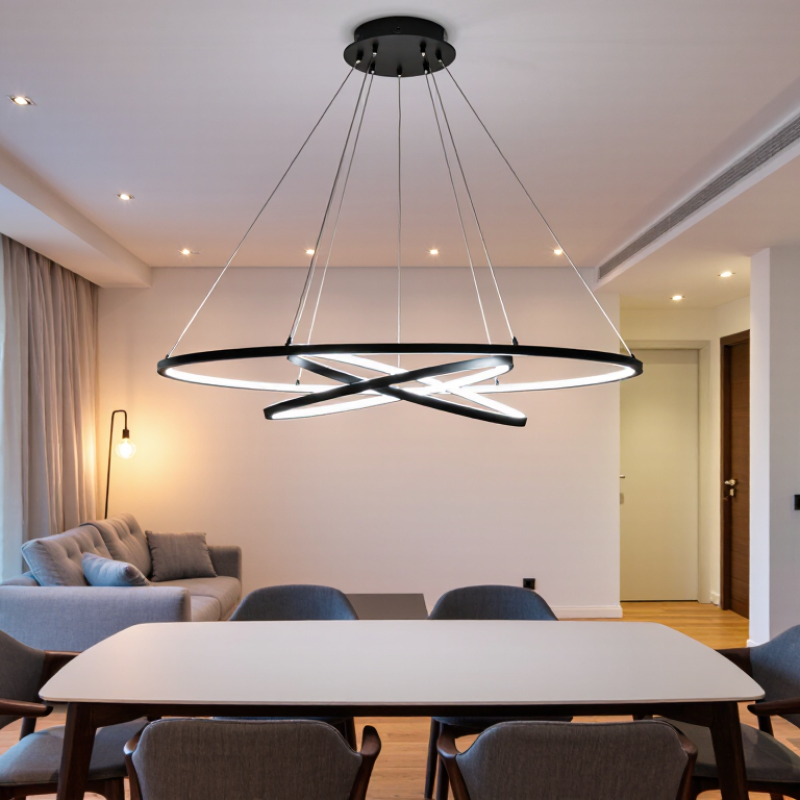
Modern lighting trends favor warm, layered light over one bright ceiling fixture. A sculptural pendant can add focus above a dining table, while recessed lights keep ceilings visually quiet. Neither works everywhere. In a narrow kitchen, a pendant may obstruct sightlines, so slim under-cabinet bars can illuminate chopping areas more effectively. Soft, indirect wall lights create a calmer feel in bedrooms and living rooms.

Fixture types differ in both appearance and task performance. Track lighting is adjustable, making it useful for highlighting shelves or artwork, but exposed heads can feel busy in a small room. Floor lamps are flexible and easy to reposition; however, they may leave dark patches if used alone. A flush-mount fixture suits low ceilings, while a chandelier needs enough clearance to avoid crowding the space. Measure before buying. Check the table height, ceiling height, and beam spread.

Layering usually gives the most control: combine ambient light with task and accent fixtures, then add dimmers where practical. Warm white light often feels comfortable in living spaces, while a clearer tone can help with detailed kitchen work. Bulb labels can be confusing, and room colors may look different under artificial light. Test one bulb first. I still find that a beautiful fixture can disappoint when its light lands in the wrong place.

Choose Light Sources, Color Temperatures, and Controls

Choose light sources by what each area needs, not by fixture style alone. A ceiling fixture can provide general illumination, while a reading lamp puts light directly on a page. Add a small accent light to highlight a textured wall or bookshelf. In kitchens, aim for even light across counters and reduce shadows near the sink. Layering gives you more flexibility than relying on one bright bulb.

Color temperature changes how a room feels. Warm white, around 2700–3000 kelvin, often suits bedrooms and living rooms. A more neutral white can make detailed tasks easier in work areas. These are starting points, not rules; paint colors and daylight affect the result. Test it at night. A sample bulb may look different once the room’s other lights are on.

Controls matter just as much as the light itself. Put frequently used fixtures on accessible switches, and consider dimmers where people read, eat, or relax. Check that bulbs and dimmers are compatible before installation; mismatches can cause flickering or limited dimming. Small changes matter. It is easy to over-light a room when choosing fixtures in a showroom, and I would reconsider that choice after seeing the same space on a quiet evening.

How to Choose Modern Lighting Trends for Your Home? - Choose Light Sources, Color Temperatures, and Controls

Room or Use Modern Lighting Approach Recommended Light Source Suggested Color Temperature Useful Controls Practical Considerations
Living room Layer ambient, task, and accent lighting instead of relying on one bright ceiling fixture. Dimmable LED ceiling fixtures, floor lamps, and directional accent lights. 2700–3000 K for a warm, relaxed atmosphere. Dimmer or preset scenes for reading, entertaining, and relaxing. Check that LED lamps and dimmers are listed as compatible to reduce flicker or buzzing.
Kitchen Combine even general illumination with focused light over counters and islands. LED ceiling fixtures plus under-cabinet LED task lighting. 3000–3500 K for a balanced, comfortable appearance. Separate controls for ceiling and task lights; dimming can help during dining. Place task lighting to limit shadows on work surfaces, and select suitable fixtures for the installation location.
Bathroom vanity Use well-distributed face lighting rather than depending only on a light above the mirror. LED vanity fixtures on both sides of the mirror, or a broad, evenly diffused fixture. 3000–4000 K, with a color rendering index (CRI) of 90 or higher when accurate color appearance matters. Separate vanity and general lighting; use a compatible dimmer where appropriate. Choose fixtures rated for the bathroom zone and moisture exposure in which they will be installed.
Bedroom Favor low-glare ambient light and convenient reading lights at the bedside. Dimmable LED ceiling or wall fixtures, with focused bedside lamps or sconces. 2700–3000 K for a warm evening setting. Bedside switches, dimmers, or simple scenes for reading and winding down. Place reading lights so the beam reaches the page without shining directly into the eyes.
Home office Balance general room lighting with adjustable task lighting at the desk. LED ceiling lighting and an adjustable desk lamp. 3000–4000 K, selected to suit the task and personal comfort. Independent task-light control and dimming where supported. Position lights to reduce reflections on screens; a higher color temperature is not automatically better for every user.
Hallway or entry Use consistent, welcoming illumination and add low-level guidance lighting if useful. LED flush-mount fixtures, wall lights, or low-level LED fixtures. 2700–3000 K for a warm residential feel. Occupancy sensors, timers, or scheduled controls can help manage lights in frequently used passages. Set sensor location and timeout to avoid missed detections or lights switching off too quickly.
Outdoor entry or pathway Direct light onto steps, paths, and entrances while limiting glare and spill into neighboring areas. Outdoor-rated LED wall, ceiling, or pathway fixtures. 2700–3000 K is a common choice for a warmer outdoor appearance. Photocell, timer, or motion sensor, depending on the location and use. Check the fixture’s weather rating and aim the light downward where practical.
Whole-home planning Choose efficient LEDs, layer different types of light, and keep controls simple to use. LEDs are widely used because they generally consume less energy and last longer than incandescent lamps. Use warmer tones for restful spaces and choose task lighting temperatures based on comfort and visibility. Use compatible dimmers, switches, sensors, or smart controls; provide a manual control option where practical. Compare lumens for brightness, watts for energy use, CRI for color rendering, and product specifications for dimming compatibility.

Plan Fixture Placement, Installation, and Energy Use

Modern lighting works best when each fixture has a clear job. Map the room before shopping: mark reading chairs, kitchen counters, and places where people gather. A pendant centered over a dining table can anchor the space, while a floor lamp beside a chair offers focused light. Check ceiling height and door swings, too. A beautiful fixture can feel awkward if it hangs in the wrong spot.

Tips: Use layered light. Combine general, task, and accent fixtures, then test them at night. Dimmer controls help adjust brightness, but compatibility matters.

Installation deserves as much thought as style. Confirm that the ceiling box can support the fixture’s weight, and ask a qualified electrician to handle uncertain wiring. Measure twice; moving a junction box later can mean extra work. Choose efficient LED bulbs with a warm or cool tone suited to the room, and check the fixture’s recommended bulb type. I’ve found that brighter is not always better: glare on a kitchen counter can make even a polished design uncomfortable. Try the planned layout with temporary lamps first, if possible. That small test may reveal a dark corner—or a pendant that feels too low—before installation.

FAQS

How can I choose a modern lighting style for my home?

Start with ceiling height, window direction, wood tones, and daily routines. A low ceiling often suits a close-fitting fixture.

What does layered lighting mean?

Combine general room light, focused task lighting, and softer accents. A reading chair may need a floor lamp nearby.

How do I choose a light’s color temperature?

Warm light can soften pale walls and timber. Cooler light may feel sharper in work areas, but test bulbs in the room.

Are LED bulbs a practical choice?

They use at least 75% less energy and can last up to 25 times longer than incandescent bulbs. Efficient, but color still matters.

Where should I place a pendant light?

Center it over the dining table, and check ceiling height and door swings. A pendant hung too low can feel awkward.

Can dimmers improve a room?

Yes. They can shift a living room from reading light to softer evening brightness, if the bulbs and controls are compatible.

What should I check before installing a fixture?

Confirm that the ceiling box can support its weight. Ask a qualified electrician about uncertain wiring.

How can I test a lighting plan before installation?

Use temporary lamps at night to spot dark corners or glare on counters. The first arrangement may still need reconsidering.

Conclusion

Choosing Modern Lighting Trends For Homes begins with understanding how each room is used, how much natural light it receives, and what fixtures or wiring are already in place. From there, select a contemporary style that complements the home’s architecture and furnishings. Compare options such as pendants, recessed lights, wall fixtures, and layered lighting, considering both appearance and practical needs.

Next, choose suitable light sources, color temperatures, and controls to create comfortable, adaptable spaces. Warm light can make living areas feel inviting, while brighter, cooler light may support focused tasks. Plan fixture locations carefully to provide balanced illumination, avoid glare, and suit everyday activities. Finally, consider installation requirements and energy use so the finished lighting scheme is attractive, functional, and efficient.

Amelia

Amelia

Amelia is a seasoned marketing professional with a wealth of expertise in our company’s core offerings. With an unwavering passion for driving growth and innovation, she plays a pivotal role in shaping our marketing strategies and enhancing brand visibility. A key aspect of her responsibilities......