Choosing Lighting For Restaurant Ambience is not simply a matter of making tables visible. It shapes how guests read the menu, notice food colors, and feel during a meal. Warm light can soften a narrow dining room, while brighter neutral light may support a lively breakfast service. The wrong fixture can create glare on polished plates or leave important corners looking forgotten. Small details matter.
Lighting designer Randall Whitehead is widely associated with the phrase, “Lighting is the jewelry of the room.” His observation reflects a practical truth: carefully selected light can make ordinary materials feel richer. A pendant above a wooden table, concealed wall light near textured plaster, or candle-like glow beside a booth can change the room’s emotional temperature. Yet decoration alone is not enough. Restaurant lighting must also support staff movement, cleaning, food presentation, and safe navigation.
This guide examines how to choose color temperature, brightness, beam direction, fixture placement, and control systems. It considers the changing needs of lunch, dinner, private events, and outdoor seating. Some recommendations may conflict. Very warm lighting can create intimacy, but it may distort fresh food colors. Dramatic shadows can add character, but they may frustrate guests reading menus. There is no universal formula. Test the lighting at occupied tables, not only from the designer’s viewpoint. Notice reflections in glasses. Check faces from different seats. Then adjust what looks impressive in drawings but feels uncomfortable in practice. A few choices may still need reconsideration. That is part of designing a restaurant atmosphere that works beyond the first impression.
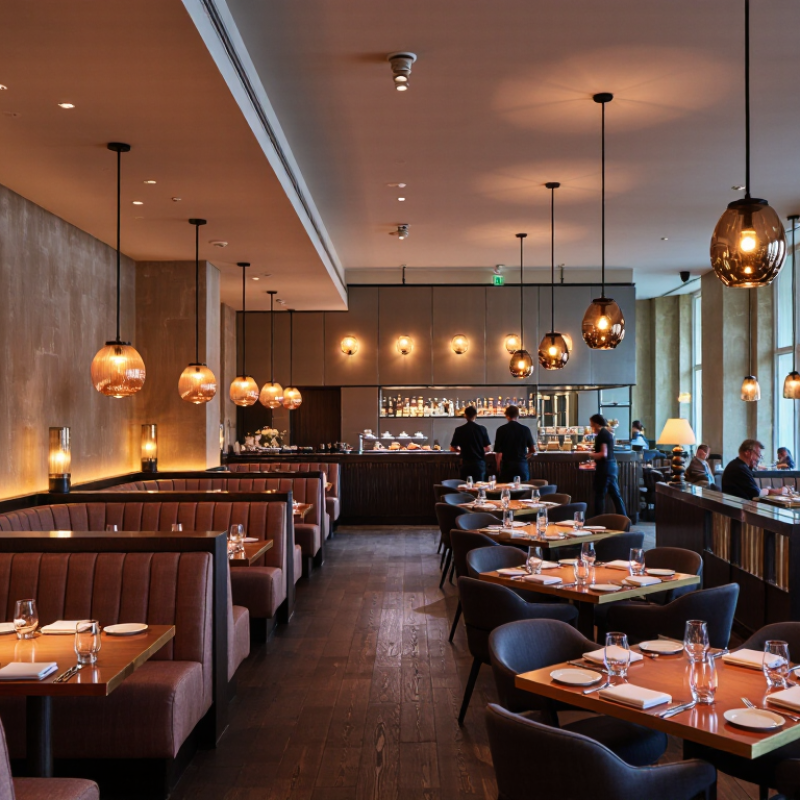
Lighting does more than make a restaurant visible. It defines how guests read the room, the menu, and each other. A warm, low-level glow can soften hard surfaces and encourage longer conversations. Brighter light can support quick service, clear menu reading, and a more energetic mood. The role must be decided before selecting fixtures.
A Cornell University field study reported that softer lighting and music reduced diners’ calorie intake by about 18%, while improving meal satisfaction. This finding suggests that lighting can influence behavior, not merely decoration. Still, it is not a universal recipe. A dim dining room may feel intimate at 7 p.m., then become uncomfortable when guests struggle to read small menu text. I have seen this mistake repeatedly.
Use layers. Ambient light should provide overall comfort. Task lighting should illuminate tables without creating glare on plates or glasses. Accent lighting can guide attention toward architectural details, artwork, or a host stand. The Illuminating Engineering Society recommends controlling glare and maintaining suitable visual conditions for specific tasks. That principle matters near payment areas and accessible routes. The U.S. Department of Energy also reports that LED lighting uses at least 75% less energy than incandescent lighting and lasts up to 25 times longer. Efficiency supports the ambience, but it does not create it. Test the space from a seated guest’s eye level. Check the corners. Watch the shadows. Some choices will still need revision.
Assess the space before choosing fixtures. Walk through the restaurant during lunch, dinner, and closing time. Measure ceiling height, table spacing, window positions, and wall colors. Note where shadows fall.
A narrow dining room needs softer, layered light to prevent a cramped feeling. Window light changes throughout the day. Test the room after sunset too. Aim for comfortable visibility, not maximum brightness.
Guests should read menus easily and recognize food colors clearly. Light sources with high color accuracy usually support that experience. Warm tones around 2700K to 3000K often suit relaxed dining. However, very warm light can make some dishes look dull.
Map the layout around guest movement and service tasks. Keep walkways evenly lit, especially near steps, entrances, and restrooms. Place focused light above tables, but avoid harsh reflections on glossy plates or glassware.
Pendant fixtures can define seating areas when mounted high enough to protect sightlines. The bar, host stand, and waiting area may need slightly brighter illumination. Dimmers allow staff to adjust the mood as daylight fades.
I have misjudged brightness by viewing an empty room. A busy dining room absorbs sound and feels darker. That mistake still influences my checks.
Ask staff where shadows slow service, then observe guests without interrupting them. A qualified electrician should verify installation, ventilation, controls, and local safety requirements before opening.
Select lighting types, color temperatures, and brightness as one connected design decision. In my restaurant lighting assessments, layered light usually creates the most comfortable experience. Ambient fixtures provide general visibility, while pendants or wall lights add warmth near tables. Adjustable spotlights can highlight artwork, architectural details, or plated dishes without flooding the entire room. Avoid relying on one ceiling fixture. It often makes guests feel exposed.
Color temperature strongly shapes perception. Warm light between 2700K and 3000K can make wood, bread, and skin tones appear inviting. Neutral light around 3500K may suit bright cafés or lunch-focused spaces. Cooler light can feel clean, but it may make a dining room seem clinical. Test samples beside actual tableware and wall finishes. Screenshots are not enough. I once approved a warm setting that looked attractive alone, yet turned muddy against dark furniture.
Tips: Use dimmable controls for changing service periods. Keep dining tables brighter than walkways, but avoid glare at eye level. A small table lamp can create intimacy; a concealed strip light can improve safety near steps. Measure brightness at seated eye level, not only from the floor. Recheck the room during daytime, evening service, and cleaning. Perfect balance is difficult. Staff feedback may reveal problems designers miss. Adjust slowly, because brighter is not always better.
How to Choose Lighting for Restaurant Ambience
Coordinate every fixture with the restaurant’s interior design, not just its electrical plan. A brass pendant may suit warm timber, but it can feel misplaced beside polished concrete and dark steel. Start with the room. Study its colors, textures, ceiling height, and sightlines before selecting fixtures.
Use lighting layers to support the restaurant’s atmosphere. Pendant lights can define tables, while concealed ceiling fixtures provide gentle general illumination. Wall lights may soften hard surfaces and guide guests through narrow areas. Keep the fixture shape consistent with the furniture language. Rounded shades complement curved seating, while slim linear fittings suit clean, geometric interiors.
Light quality matters as much as appearance. Choose a warm color temperature for intimate dining, but confirm that food still looks natural. High color rendering helps vegetables, sauces, and skin tones appear believable. Control glare carefully, especially above reflective tables. Dimmers allow staff to adjust lighting between lunch, dinner, and cleaning periods. Test it at night.
I once saw a carefully designed dining room weakened by oversized pendants. They blocked views and made the ceiling feel lower. The lesson was simple: attractive fixtures still need visual restraint. Check mounting heights, walking clearance, maintenance access, and local electrical requirements with a qualified professional. A design can look perfect on paper and still feel uncomfortable in the room. Need revision.
Coordinate fixture types with the restaurant’s interior design by balancing comfortable ambient light with brighter task lighting in service areas.
These representative planning levels are expressed in lux. Dining areas generally use softer light for comfort, while counters and kitchens require higher illumination for accurate service and safe work. Warm light sources around 2700–3000K are commonly suitable for dining spaces, while neutral white light is more practical in work areas.
A restaurant lighting scheme should be tested during service, not only viewed on a computer screen. My first layout often looks too bright. On site, stainless steel reflects glare, while dark walls absorb more light than expected. Walk through the dining room at lunch and dinner. Check faces, menus, tabletops, and pathways from seated eye level.
Use a light meter to record readings at tables and service points. Compare those readings with the target levels recommended by a qualified lighting professional. Then ask staff and diners about comfort, shadows, and visual fatigue. The U.S. Department of Energy reports that LED lighting can use at least 75% less energy and last up to 25 times longer than incandescent lighting. That efficiency still fails if poorly aimed fixtures create harsh contrast. Dimming helps, but cheap controls can produce flicker.
Keep a simple maintenance log. Record lamp failures, color changes, cleaning dates, and control settings. Dusty lenses can reduce useful light, while aging components may shift color. The U.S. Energy Information Administration reported that lighting represented about 17% of electricity use in surveyed commercial buildings. Small adjustments therefore affect both atmosphere and operating costs. Recheck the scheme after furniture changes, wall repainting, or seasonal daylight shifts. It may need correction. My own mistake was treating maintenance as an annual task; busy dining rooms often require closer attention.
| Restaurant Area | Recommended Illuminance | Suggested Colour Temperature | Colour Rendering | Test Position and Method | Adjustment Guidance | Maintenance Check |
|---|---|---|---|---|---|---|
| Dining tables | 100–200 lux At the tabletop during normal service |
2,700–3,000 K Warm white for a relaxed dining atmosphere |
CRI ≥ 90 Helps food colours appear natural |
Measure with a calibrated lux meter at several occupied tables. Take readings with daylight excluded and then repeat during operating hours. | If food appears dull, increase neutral fill light slightly rather than raising only decorative fixture output. Use dimming to avoid excessive brightness. | Clean shades, lenses, and reflectors every 3–6 months in dusty areas. Check for dark spots, flicker, and uneven illumination. |
| Bar and service counter | 200–300 lux On the working surface |
2,700–3,000 K Warm light with enough visibility for service |
CRI ≥ 90 | Measure at the counter surface and at drink-preparation areas. Check the view from seated customers to identify glare. | Increase task lighting below shelves or cabinets if staff create shadows. Shield exposed lamps that reflect in glassware. | Inspect LED drivers, dimmers, and under-shelf fixtures every 6 months. Replace damaged diffusers promptly. |
| Entrance and host stand | 150–250 lux At floor and reception surfaces |
2,700–3,500 K Warm to neutral white for visual transition |
CRI ≥ 80 CRI ≥ 90 is preferable for finishes and signage |
Measure both inside and outside the entrance at opening, daytime, and evening. Compare the transition between exterior and interior brightness. | Reduce abrupt contrast by using a controllable entrance scene. Avoid placing bright fixtures directly in a guest’s line of sight. | Clean glass doors, wall lights, and signage lighting monthly in high-traffic locations. |
| Circulation and aisles | 100–150 lux At floor level and along changes in level |
2,700–3,500 K | CRI ≥ 80 | Take readings along the walking route, including corners, steps, and areas between tables. Check for shadows caused by furniture. | Correct dark patches with wall washing or low-glare directional lighting instead of increasing all room lighting. | Check failed lamps, loose fittings, and blocked light output during monthly safety inspections. |
| Private dining and lounge areas | 75–150 lux With higher levels available for cleaning and setup |
2,400–2,700 K Warm white for an intimate atmosphere |
CRI ≥ 90 | Measure at seating surfaces and tabletop height. Test the space in the intended evening scene, not only at full output. | Use layered lighting: low ambient light, focused table illumination, and separately controlled decorative accents. | Review dimming performance every 6 months. Replace lamps or drivers that produce colour shifts compared with adjacent fixtures. |
| Restrooms | 200 lux At mirror and general task areas |
3,000–4,000 K Neutral appearance for grooming tasks |
CRI ≥ 80 CRI ≥ 90 is preferable at mirrors |
Measure at the basin, mirror, and floor. Check that vertical facial lighting is balanced and does not create strong eye sockets or shadows. | Add diffuse vertical lighting at mirrors. Avoid relying on a single ceiling fixture behind the user. | Clean mirror lights and ventilation-exposed fixtures every 1–3 months. Verify moisture-rated fittings where required. |
| Kitchen and food-preparation areas | 500 lux At work surfaces; verify local regulations |
4,000–5,000 K Neutral to cool white for visual accuracy |
CRI ≥ 80 Higher CRI may improve food inspection |
Measure at cutting boards, preparation counters, cooking surfaces, and washing stations. Test with staff working beneath the fixtures. | Use sealed, low-glare task fixtures. Reposition lights when staff or equipment creates persistent shadows. | Clean grease and dust from sealed fittings according to the cleaning schedule. Inspect for flicker, heat damage, and failed emergency lighting. |
| Display, artwork, and feature walls | 300–500 lux On the displayed surface, subject to material sensitivity |
2,700–3,500 K | CRI ≥ 90 | Measure on the feature surface and view it from normal guest positions. Check for reflected glare and uneven hotspots. | Use adjustable accent lighting with controlled beam angles. Reduce output if artwork, timber, or finishes show heat or light damage. | Dust adjustable heads and lenses every 3–6 months. Re-aim fixtures after furniture or artwork is moved. |
| Lighting controls and scenes | 3–5 programmed scenes For setup, lunch, dinner, cleaning, and closing |
Consistent CCT Within each visual zone |
No visible flicker At normal camera and guest viewing conditions |
Test each scene at opening, peak service, and closing. Confirm that dimmers operate smoothly without audible noise or sudden jumps. | Adjust one lighting layer at a time. Record lux readings, dimmer levels, time of day, and guest or staff feedback. | Review scene settings quarterly and after furniture, menu, wall colour, or daylight conditions change. |
Measurement note: Illuminance values are practical design targets based on commonly used workplace and hospitality lighting guidance. Confirm final levels against applicable local building, health, accessibility, fire-safety, and energy regulations. Measure with a calibrated lux meter and record results at the same points after every lighting adjustment.
Warm, low-level light can soften hard surfaces and encourage longer conversations. Brighter light creates a quicker, more energetic mood. Lighting shapes behavior, not just appearance.
Ambient lighting provides general comfort. Task lighting helps guests read menus and see meals. Accent lighting highlights artwork, architecture, or the host stand.
Warm light around 2700K to 3000K often feels comfortable. Very warm light may dull certain food colors. Test dishes before deciding.
Keep entrances, steps, restrooms, and walkways evenly illuminated. The bar and waiting area may need slightly brighter light. Avoid dark corners.
Aim fixtures away from eyes and glossy tableware. Check reflections on plates, glasses, and stainless-steel surfaces. Seated eye-level testing is essential.
Dimmers help adjust lighting as daylight fades. They also support different service periods. However, poor controls may create flicker.
Test during lunch, dinner, and closing time. Check faces, menus, food colors, tabletops, and pathways. A light meter can record useful readings. Empty rooms can mislead you.
LED lighting generally uses much less energy and lasts longer than incandescent lighting. Efficiency supports the atmosphere, but poor aiming still creates harsh contrast. Mine was too bright.
Lighting For Restaurant Ambience plays an essential role in shaping how guests feel, move, and interact within a dining space. A successful lighting plan should begin by defining the desired atmosphere, whether it is warm and intimate, bright and energetic, or refined and relaxed. Consider the restaurant’s layout, ceiling height, seating arrangement, service areas, and the experience guests should have from arrival through departure.
Choose a balanced combination of ambient, task, and accent lighting, then adjust color temperature and brightness to support both comfort and functionality. Fixtures should complement the interior design without distracting from the food or overall setting. Before finalizing the scheme, test the lighting during different service periods and from various seating positions. Make practical adjustments to reduce glare, improve visibility, and create visual consistency. Regular cleaning, bulb replacement, and equipment checks will help preserve the intended mood and ensure the lighting remains effective over time.
Boffo Lights