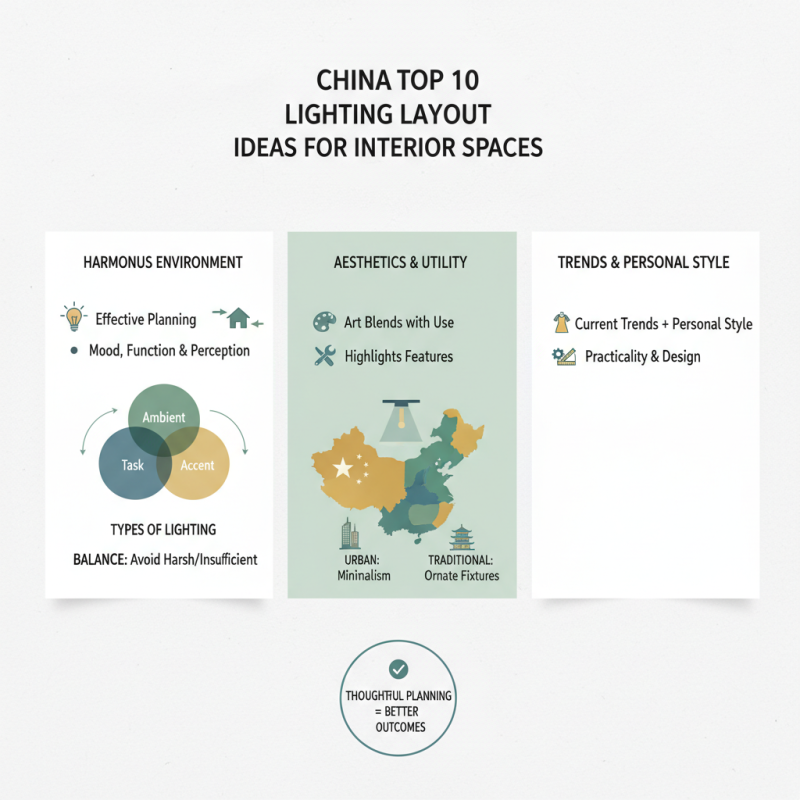
Creating a harmonious environment in your home starts with effective Lighting Layout Planning For Interiors. The right lighting can transform an ordinary space into something extraordinary. It affects mood, functionality, and even perception of size. Thoughtful lighting design highlights features and enhances architecture.
In China, interior lighting is more than mere illumination. It is an art that blends aesthetics with utility. Incorporating different types of lighting such as ambient, task, and accent is essential. Each plays a vital role in creating a balanced atmosphere. For instance, an overabundance of harsh lighting can create discomfort. Alternatively, insufficient lighting can lead to frustration and decreased productivity.
Design trends vary across different Chinese regions. Urban settings may favor minimalism, while traditional homes may opt for more ornate fixtures. While it's crucial to follow current trends, personal style should not be overlooked. Thoughtful planning requires weighing practicality and design. Striking a perfect balance can be challenging, but this deliberate approach leads to better outcomes.
Lighting plays a crucial role in enhancing the aesthetic of modern Chinese interiors. Innovative techniques can transform any space. Layering different light sources creates depth. Consider combining ambient, task, and accent lighting. Use warm tones to evoke a cozy atmosphere. Soft recessed lighting can highlight architectural features. It adds elegance without overwhelming the room.
Using smart lighting systems is another compelling idea. These systems allow for customizable intensity and color. You can adjust the mood with just a tap on your smartphone. Consider integrating LED strips in furniture or along walls. They can create a stunning visual effect. However, finding the right balance can be challenging. Too much light may detract from the desired ambiance.
Natural light is a valuable asset in any design. Large windows can invite the outdoors in, enhancing the space. Use sheer curtains to diffuse sunlight gently. This can create a calm and serene environment. However, managing glare might require more thought. Reflection and shadow can affect how the decor appears. Embracing these aspects can lead to unique and inspiring interiors.
Choosing the right lighting fixtures is crucial for enhancing various interior styles. These fixtures should harmonize with the overall design and purpose of each space. For a minimalist aesthetic, sleek and simple designs work best. They provide illumination without overwhelming the space. A few well-placed pendant lights can create focal points in an otherwise bare room.
For eclectic styles, incorporate a mix of textures and colors. Vintage lamps can add character to modern spaces. Think about using chandeliers with unique shapes. They can act as statement pieces in a room filled with diverse decor. However, balance is key. Too many competing styles can confuse the eye.
In traditional settings, consider using warm-toned fixtures that evoke a sense of comfort. Wall sconces and classic ceiling fixtures provide ambient light and a cozy atmosphere. Yet, it is important not to stick rigidly to one style. Experimenting with different fixtures can lead to unexpected yet delightful combinations. Finding the right lighting is an ongoing journey of discovery.
Layered lighting is a technique that enhances the beauty of interior spaces. It involves combining various light sources to create depth and atmosphere. A layered approach adds complexity and warmth to any room. This method includes ambient, task, and accent lighting. Each type serves a specific purpose, contributing to the overall ambiance.
To effectively implement layered lighting, start by assessing your space. Consider the activities that will occur in each area. Use ambient lighting for general illumination. Task lighting is essential for work areas, such as reading nooks. Accent lighting can showcase artwork or architectural features. Mixing these elements will make your space more inviting.
Tips: Use dimmers for flexibility. Adjust brightness to suit different moods. Layer textures with light fixtures. A pendant light can contrast beautifully with wall sconces. Experiment with varying heights and colors for visual interest. Remember, lighting can transform a room, but too much can feel overwhelming.
Inadequate lighting can lead to a flat, dull space. It’s crucial to find the right balance. Reflect on how you use each room. Does the lighting suit those activities? Pay attention to how these changes affect mood and functionality. By adjusting your approach, you can achieve a well-lit, harmonious environment.
Incorporating sustainable lighting solutions into interior spaces not only enhances beauty but also promotes eco-friendliness. Many homeowners are now prioritizing energy-efficient LED lights. These lights consume less electricity and have a longer lifespan compared to traditional options. Using warmer tones in lighting can create a cozy atmosphere. This simple choice significantly reduces energy use without sacrificing comfort.
Consider using natural materials for light fixtures. Bamboo, cork, or reclaimed wood are excellent choices. They not only look beautiful but also minimize your carbon footprint. Think about the placement of your lights. Having layered lighting—ambient, task, and accent—can improve functionality. It is essential to balance natural and artificial lighting. Relying too much on electric lights can defeat the purpose of being sustainable.
Research shows that using dimmable options can also contribute to energy savings. These features allow users to adjust lighting based on needs. Reflect on how you use light in your daily life. Are there areas where you can use less? Being mindful about light usage can lead to remarkable energy reductions. Sustainable lighting fosters not only a beautiful interior but also a healthier planet.
Color temperature plays a crucial role in enhancing the atmosphere of interior spaces. It refers to the hue of the light emitted by a source, measured in Kelvin (K).
Warm white light (below 3000K) creates a cozy, inviting environment. In contrast, cool white light (4000K and above) stimulates alertness and focus, making it ideal for workspaces.
According to a study by the International Association of Lighting Designers, over 70% of respondents indicated that light color markedly affects their mood. Poor lighting can lead to discomfort and eye strain. It’s essential to select appropriate lighting for each room. For a living room, using warm tones promotes relaxation, while kitchens benefit from brighter, cooler tones to enhance visibility.
Tips: When planning lighting, consider layering different temperatures. A combination of warm and cool can create depth and interest. Also, use dimmers to adjust the ambiance as needed. If you notice harsh shadows, rethink the placement of your lights. The balance between functionality and aesthetics is crucial.
: Lighting enhances aesthetics and transforms spaces, creating atmosphere and depth.
Mix ambient, task, and accent lighting to achieve a balanced effect in your space.
Use warm tones in your lighting to evoke a sense of comfort and warmth.
Large windows and sheer curtains can help diffuse sunlight, creating a serene environment.
Consider using bamboo, cork, or reclaimed wood. They're beautiful and eco-friendly.
Smart systems allow you to customize intensity and color, adjusting mood easily.
These lights consume less electricity and last longer, promoting eco-friendliness.
Relying too much on electric lights can overshadow natural light's benefits.
They let you adjust lighting based on needs, reducing electricity consumption effectively.
Reflect on your daily light needs and identify areas to reduce usage.
The article "China Top 10 Lighting Layout Ideas for Interior Spaces" delves into innovative lighting techniques tailored for modern Chinese interiors. It emphasizes the importance of "Lighting Layout Planning For Interiors," which enables designers to choose the right fixtures that enhance various interior styles. The discussion includes the significance of layered lighting to create depth and ambiance, fostering a cozy atmosphere in living spaces.
Additionally, the article highlights sustainable lighting solutions for eco-friendly interiors, promoting energy efficiency alongside aesthetic appeal. By examining color temperature and its effects on the overall mood of interiors, readers are guided to make informed choices that not only beautify spaces but also contribute positively to the environment. This comprehensive approach to lighting layout planning enhances both functionality and style in interior design.

Boffo Lights