Choosing reliable China suppliers requires more than comparing catalog prices. Lighting For DIY Home Improvement must balance safety, appearance, installation ease, and long-term performance. This guide introduces leading Chinese suppliers serving homeowners, retailers, contractors, and online sellers. It focuses on practical product evidence, not attractive claims alone.
Many suppliers offer LED strips, recessed downlights, pendant fixtures, cabinet lights, and smart controls. Their factories may support custom colors, plug types, beam angles, and packaging. However, product quality can vary between batches. A bright sample does not guarantee stable performance after months of use. Buyers should review test reports, warranty terms, factory experience, and quality-control procedures. Check voltage compatibility carefully. Examine the driver, connector, heat sink, and cable insulation before installation.
Reliable companies should communicate clearly about certifications, ingress protection, color rendering, and expected lifespan. They should also provide samples that match bulk orders. In my experience, detailed questions reveal more than polished brochures. Some suppliers respond quickly but provide vague technical data. That is a warning sign. Others explain limitations honestly, which often indicates stronger professional practice.
This overview compares supplier capabilities, product specialization, customization services, and export experience. It also considers how each company supports DIY users with instructions, mounting accessories, and replacement parts. No supplier is perfect. Even experienced manufacturers may need closer inspection when designs change. Careful verification remains essential. The right partner can make home lighting safer, simpler, and more visually consistent.
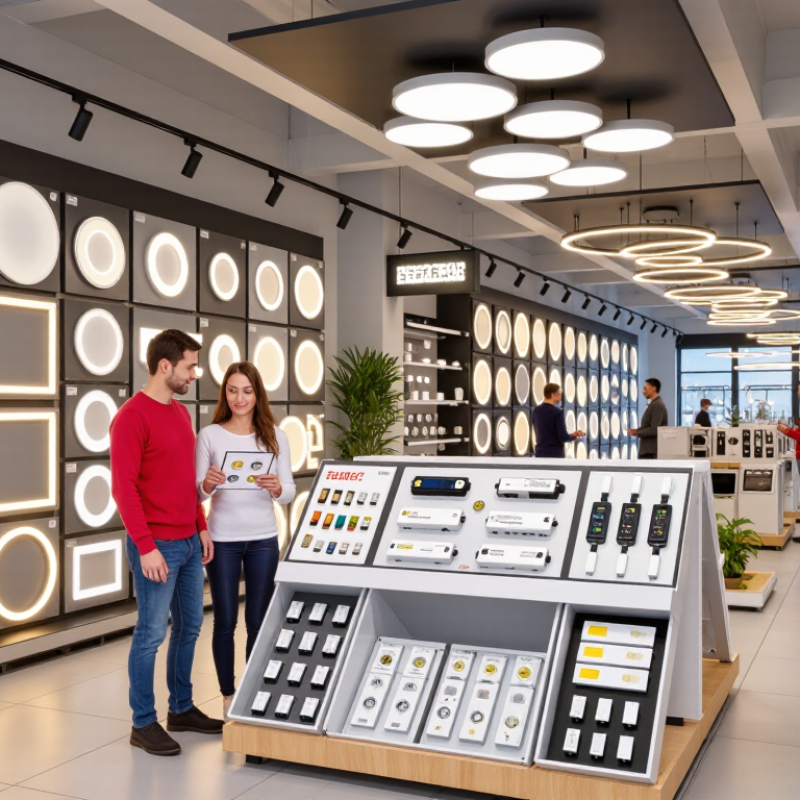
China Top DIY Home Improvement Lighting Suppliers
China’s DIY lighting market showed steady export activity during 2023 and 2024. LED strip kits, rechargeable lamps, cabinet lights, and pendant fixtures remained practical categories for home projects. Supply was supported by flexible assembly lines and broad component access. However, demand was not equally stable across every product type.
Export indicators deserve careful reading. Shipment value alone can mislead because copper, batteries, and packaging costs changed during this period. Buyers should compare order volume, average unit value, delivery time, and repeat shipment frequency. Customs data, supplier invoices, and inspection records offer stronger evidence than online listings. Small details matter. A clear carton label matters.
From a sourcing perspective, reliable suppliers usually provide test reports, wiring diagrams, installation guidance, and traceable production information. They should explain minimum order quantities without hiding replacement or tooling costs. For DIY products, safety instructions must be easy to understand, especially for adapters and battery-powered units. Some suppliers still present polished samples but weaker production controls. That gap needs reflection. A lower quotation may reduce confidence rather than improve value. Buyers should request recent export references, random inspections, and a small trial order before scaling.
China’s leading DIY home improvement lighting suppliers increasingly publish LED efficacy data, not only wattage. In practical sourcing, look for tested output above 100 lumens per watt for household fixtures. Ask whether figures describe the LED chip or the complete lamp. That difference matters.
For comfortable rooms, choose products with CRI 80 or higher. Kitchens, studios, and craft areas may benefit from CRI 90, especially when color accuracy affects food, paint, or fabric decisions. During sample checks, compare a red cloth and a wooden surface under the lamp. Cheap samples can look bright while making colors appear strangely dull.
A flexible CCT range from 2700K to 6500K supports warm bedrooms, neutral workspaces, and cool utility areas. Confirm that the adjustment is smooth, not limited to two preset steps. Suppliers should provide test reports, rated lifetime, driver details, and photometric files. I also inspect flicker performance and heat management, because high efficacy can hide uncomfortable operation. Small housings may become hot after several hours. That warning is easy to overlook. Supplier claims still require independent verification. Request production samples before placing a larger order, and record brightness, color consistency, and surface temperature during testing.
Representative LED performance benchmarks by correlated color temperature, focusing on efficacy, CRI 80+ compliance, and the 2700–6500K CCT range.
The figures are rounded, representative specification benchmarks for mainstream residential LED products: efficacy is shown in lumens per watt, while CRI values represent the stated minimum color-rendering index. Actual performance varies by product design, driver, diffuser, power level, and test conditions.
For residential DIY projects, 5–15 W lighting products offer a practical balance between brightness, heat, and installation cost. The International Energy Agency reports that lighting uses about 15% of global electricity consumption. LED products also reduce energy use substantially compared with incandescent lamps, according to the U.S. Department of Energy. These figures make efficient bulbs, panels, strips, and fixtures important for everyday renovation decisions.
A 5–9 W bulb can suit bedside lamps, corridors, and small bedrooms. Choose 10–15 W bulbs for kitchens or larger living areas. Slim LED panels distribute light evenly across ceilings, while flexible strips add useful task lighting beneath cabinets. For a reliable specification, check lumens, color temperature, CRI, and rated life. A 4000 K panel may feel clearer in a kitchen than a warm 2700 K lamp. It is a small detail, but it changes the room.
Installation experience reveals common weaknesses. Some strips look bright online but lose intensity near the far end. Some fixtures list wattage clearly, yet hide poor heat management. That matters. The U.S. Department of Energy notes that LED performance depends on thermal design and driver quality. Suppliers should provide test reports, stable dimming information, IP ratings, and packaging that protects panels from impact. I still recommend sampling before bulk purchasing; specifications can be correct, while the real light feels disappointing.
China Top DIY Home Improvement Lighting Suppliers
When evaluating DIY lighting suppliers, start with the application, not the product photo. IP20 suits dry indoor rooms, while IP65 protects against dust and low-pressure water jets. It does not permit immersion. IEC 60529 defines these ratings, so suppliers should provide test reports matching the exact model. A higher rating can also reduce ventilation and increase heat buildup.
Efficiency deserves the same scrutiny. A claimed 120 lm/W is useful, but only when measured at the complete fitting. Ask for lumen output, power consumption, color temperature, and test conditions. The U.S. Department of Energy’s LED reports show that system performance can differ greatly from laboratory component results. The IEA has reported that lighting still represents roughly 15% of global electricity use. Small efficiency gaps matter across large housing projects. I would not accept a headline figure blindly.
Certifications should include traceable documents, not only printed symbols. Check conformity evidence for electrical safety, electromagnetic compatibility, and restricted substances. Product certificates should identify the manufacturer, model, revision, and testing laboratory. Photometric files can reveal uncomfortable details, such as glare, weak color consistency, or lower output after heating. One supplier I assessed supplied excellent samples but incomplete production records. That was a warning. Factory audits, batch testing, and warranty terms may reveal more than a polished catalog.
China’s lighting hubs serve different DIY home improvement needs. Shenzhen suppliers often handle smart controls and compact LED assemblies. Zhongshan is known for decorative fixtures, pendant lights, and flexible OEM production. Ningbo can suit standard household fittings and export-ready packaging. In practice, the best supplier is not always the cheapest one.
OEM discussions should define drawings, materials, color temperature, wiring, packaging, and logo placement. MOQ may range from 100 pieces for standard items to 1,000 for customized designs. Confirm whether the MOQ applies per model, finish, or carton. Lead times commonly reach 25–45 days after sample approval and deposit. Custom molds can add several weeks. Delays happen when specifications remain vague.
Tips: Request a working sample, not only photos. Check screw alignment, diffuser thickness, light flicker, and carton strength. Ask for an assembly video and recent inspection records. A useful quality plan includes incoming material checks, electrical testing, aging tests, and a final inspection before shipment. Independent inspections can verify random cartons and quantities. I have seen attractive samples fail because the final diffuser changed. That mistake is easy to miss. Keep approved samples, signed specifications, and test results together. Recheck them before mass production, even when the supplier seems experienced.
| Lighting Hub | Typical DIY Home-Improvement Products | OEM / ODM Capability | Typical MOQ | Sample Lead Time | Bulk Production Lead Time | Common Quality-Control Practices | Best Fit for Buyers |
|---|---|---|---|---|---|---|---|
| Zhongshan / Guzhen, Guangdong | Ceiling lights, pendant fixtures, wall sconces, track lights, downlights, decorative indoor fittings | Strongest concentration of lighting factories; custom housing, finishes, packaging, color temperature, dimming and wiring options are commonly available | 50–300 units per SKU | 7–15 days | 25–45 days | Incoming-material inspection, electrical safety testing, LED aging tests, assembly inspection, carton drop tests and pre-shipment sampling | Retailers and distributors needing broad product ranges and flexible private-label development |
| Shenzhen, Guangdong | Smart bulbs, connected fixtures, LED strips, sensors, cabinet lighting, USB and rechargeable lighting | Good access to electronics, wireless modules, app integration, firmware customization and rapid prototype development | 100–500 units per SKU | 10–20 days | 30–60 days | PCBA functional testing, wireless connectivity checks, firmware verification, battery safety testing where applicable, burn-in testing and final inspection | DIY retailers and e-commerce sellers developing smart or electronic lighting products |
| Ningbo / Yuyao, Zhejiang | Outdoor wall lights, garden lights, floodlights, work lights, motion-sensor lights and portable fixtures | Mature metal, plastic and electrical-component supply chains support custom housings, mounting systems, finishes and packaging | 100–500 units per SKU | 10–18 days | 30–50 days | Ingress-protection checks, corrosion and coating inspection, photometric testing, electrical safety checks, sensor testing and carton inspections | Hardware stores, garden retailers and buyers requiring durable outdoor products |
| Yangzhou, Jiangsu | Solar garden lights, pathway lights, landscape lighting and outdoor decorative fixtures | Common customization includes solar-panel capacity, battery type, light distribution, fixture finish, packaging and operating modes | 200–1,000 units per SKU | 12–20 days | 35–60 days | Battery-capacity checks, charging and discharge tests, waterproofing inspection, solar runtime tests, illumination checks and outdoor aging evaluation | Seasonal DIY programs, garden centers and private-label outdoor lighting ranges |
| Foshan / Nanhai, Guangdong | Architectural downlights, linear lights, cabinet lights, aluminum-profile systems and commercial-grade LED fixtures | Strong aluminum extrusion, die-casting and thermal-management capabilities; suitable for custom dimensions and project specifications | 100–500 units per SKU | 10–18 days | 30–55 days | Aluminum-alloy inspection, thermal testing, lumen and color-temperature verification, driver testing, assembly checks and random final inspection | Renovation projects, kitchen-and-bath retailers and buyers prioritizing heat management and long service life |
| Jiaxing / Haining, Zhejiang | Decorative ceiling fixtures, flush mounts, fabric or metal shades, vanity lights and interior accent lighting | Suitable for finish, shade material, dimensions, color, mounting hardware and retail-packaging customization | 50–300 units per SKU | 7–15 days | 25–45 days | Shade and finish consistency checks, dimensional inspection, socket and wiring tests, assembly inspection and packaging-strength testing | Home décor retailers and DIY channels seeking coordinated decorative collections |
LED strip kits, rechargeable lamps, cabinet lights, and pendant fixtures remained practical export categories. Demand varied by product type.
Compare shipment volume, average unit value, delivery time, and repeat orders. Shipment value alone can be misleading when component and packaging costs change.
Request test reports, wiring diagrams, installation guidance, and traceable production information. Check recent export references and inspection records.
Review minimum order quantities, replacement costs, and tooling charges. A lower price is not always better value.
A 5–9 W bulb may suit a bedside lamp or corridor. Consider 10–15 W for a kitchen or larger living area.
Check lumens, color temperature, CRI, and rated life. A 4000 K panel may feel clearer in a kitchen than a warm 2700 K lamp.
A strip may lose brightness near its far end. A fixture may list wattage clearly but manage heat poorly. That gap matters.
Place a small trial order and request random inspections. Check dimming performance, IP ratings, and packaging protection for panels. Sample before scaling.
China’s DIY lighting market offers a broad and competitive supply base for residential projects, with manufacturers supporting both domestic demand and international exports. This guide examines recent supply and export indicators, along with leading product capabilities in LED efficacy, CRI 80+ color quality, and adjustable color temperatures from 2700K to 6500K. It covers practical categories such as 5–15 W bulbs, slim panels, flexible strips, and complete fixtures for different home improvement needs.
For buyers seeking Lighting For DIY Home Improvement, supplier evaluation should include IP20–IP65 protection levels, efficiency of around 120 lm/W, safety and quality certifications, and dependable testing procedures. The overview also explains how OEM services, minimum order quantities, lead times, packaging, and quality control vary among China’s major lighting production hubs, helping importers and project planners select suitable partners for reliable, energy-efficient residential lighting solutions.

Boffo Lights