 Boffo Lights
China Top Shopping Mall Lighting Design Suppliers
China’s shopping malls are becoming more than retail destinations. They now combine dining, entertainment, culture, and social experiences under one roof. This shift makes lighting a commercial tool, not merely a decorative layer.
The International Energy Agency’s 2023 Global Status Report for Buildings and Construction states that buildings consume about 30% of global final energy. Retail lighting is only one part of that demand, yet it remains highly visible and controllable. Efficient LEDs, daylight sensors, dimming systems, and smart controls can reduce waste without making corridors feel cold. The U.S. Department of Energy also identifies solid-state lighting as a key path toward improved energy performance and visual quality.
For buyers comparing China Top Shopping Mall Lighting Design Suppliers, technical depth matters. A reliable partner should understand illuminance, glare control, color rendering, emergency lighting, and local installation conditions. The CIE 150:2017 guidance on limiting obtrusive light provides useful principles for exterior façades and nearby properties. Meanwhile, CBRE’s Asia Pacific retail market reports continue to highlight experience-led retail and changing tenant strategies. These trends influence atrium lighting, storefront visibility, and visitor movement.
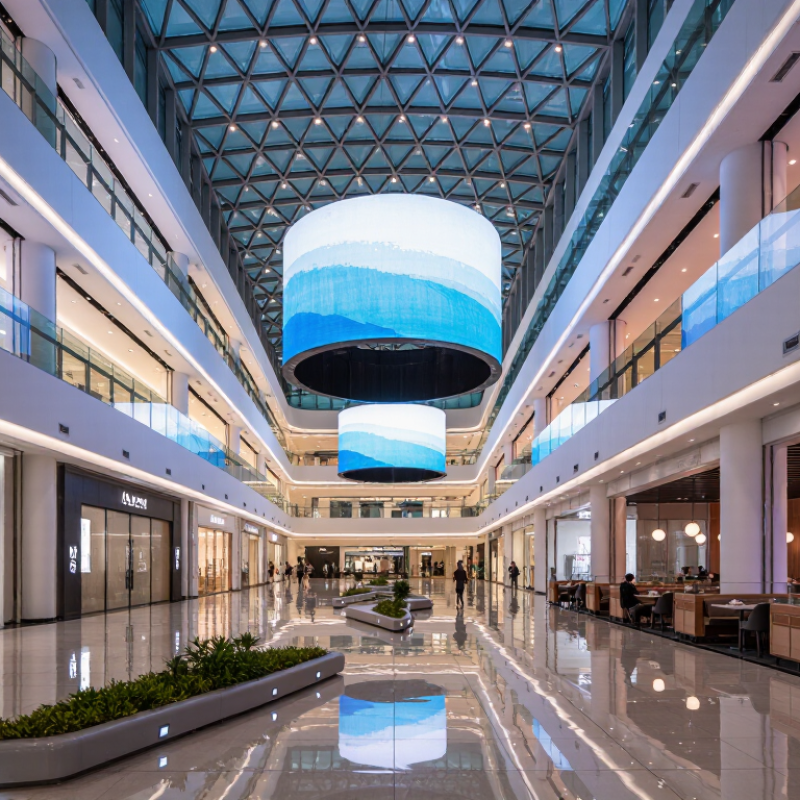
Lighting For Shopping Malls Design should begin with people, architecture, and operating costs together. A bright entrance may attract attention, but uneven contrast can quickly cause visual fatigue. A warm restaurant zone needs a different atmosphere from a luxury corridor. Details matter: concealed linear lights, low-glare downlights, and carefully aimed façade projectors can change how a mall feels at 8 p.m.
No supplier is perfect. Some proposals look impressive but overlook maintenance access or replacement costs. This guide therefore considers portfolio evidence, compliance, photometric data, project experience, and after-sales support. Market information also changes, so every shortlist deserves fresh verification.
Definition and Role of Shopping Mall Lighting Design Suppliers
China Top Shopping Mall Lighting Design Suppliers
Definition and Role of Shopping Mall Lighting Design Suppliers
Shopping mall lighting design suppliers do more than sell fixtures. They combine photometric planning, product selection, controls, installation guidance, and maintenance support. Their work connects architectural intent with measurable comfort, safety, and energy performance. The International Energy Agency reported that lighting uses about 15% of global electricity. This makes supplier expertise commercially important, not decorative.
In practice, suppliers study floor plans, ceiling heights, storefront glass, shopper movement, and tenant requirements. They may recommend different beam angles for entrances, atriums, escalators, and display zones. They also check glare, color rendering, emergency lighting, and cleaning access. A proper supplier provides lighting calculations, mock-ups, lux measurements, and commissioning records. Renderings alone are not enough. The brief is never perfect.
The U.S. Department of Energy’s solid-state lighting research reports highlight efficient LEDs, optical control, and connected systems as major improvement areas. However, projected savings are not guaranteed. Poor sensor placement, excessive brightness, or badly timed dimming can reduce real performance. Experienced suppliers therefore compare design targets with readings from occupied spaces. They should explain assumptions clearly and document product life, warranty terms, replacement access, and control compatibility. Reliable partners also coordinate with electrical engineers and local safety requirements before installation.
FAQS
A supplier plans lighting, selects fixtures, supports installation, and provides maintenance guidance. The work goes beyond selling lamps. It connects design goals with comfort, safety, and energy performance.
The team reviews floor plans, ceiling heights, glass storefronts, and visitor movement. They inspect entrances, atriums, escalators, corridors, and display zones. A dark corner may appear only after furniture arrives.
Calculations predict brightness, glare, and uniformity before installation. Mock-ups reveal color changes that software may miss. Renderings alone are not enough. The design brief may still be imperfect.
Review beam angles, color rendering, flicker control, glare, power use, and expected lifetime. Check heat management and control-system compatibility. Ask for photometric files and clear testing records. Vague quality claims need evidence.
Request recent project references, product samples, factory records, and warranty terms. Arrange a factory visit or live video audit. Inspect assembly, aging tests, packaging, and final inspection procedures. Small details reveal weaknesses.
Test the proposed layout in representative mall areas. Measure corridors, storefronts, entrances, and parking spaces. Compare calculated results with real readings. Approval should not depend on attractive images alone.
Efficient light sources, optical control, and connected systems can reduce energy use. Sensors must be positioned carefully. Poor dimming schedules may waste energy or create uncomfortable changes. Projected savings are not guaranteed.
A late tenant change can disturb a balanced lighting plan. The team should review assumptions and adjust beam angles or fixture positions. Perfect planning is unrealistic. Flexible documentation helps.
Suppliers should explain cleaning access, product life, spare parts, and replacement procedures. Compatible parts can prevent future disruption. Remote troubleshooting may help after handover. Some problems still appear years later.
Conclusion
China’s shopping mall lighting design suppliers provide integrated solutions that shape visual experiences, support commercial activity, and improve safety and energy efficiency. Their role goes beyond supplying fixtures: they analyze architectural layouts, customer flow, tenant needs, and branding objectives to create practical and attractive lighting concepts. Core services may include lighting planning, photometric calculations, product customization, installation guidance, project coordination, and technical consultation. Lighting For Shopping Malls Design typically covers general illumination, accent lighting, façade lighting, decorative features, parking areas, corridors, and emergency systems.
Modern Chinese specialists commonly apply LED technology, intelligent control systems, sensors, digital dimming, tunable color temperature, and energy-monitoring tools. When evaluating suppliers, buyers should consider design expertise, product quality, certifications, customization capacity, communication, production capability, and experience with projects of similar scale. Reliable suppliers also provide clear schedules, sample testing, quality inspections, installation support, documentation, warranty coverage, maintenance guidance, and responsive after-sales service. These factors help ensure consistent performance, efficient project delivery, and long-term operational value.
