What Are the Top Types of Lighting for Apartment Living?

Time:2026-09-29 Author:Isabella
0%

Choosing the right lighting can make a small apartment feel larger, calmer, and more functional. Yet many renters rely on one ceiling fixture and wonder why the room still feels flat.

Lighting For Apartment Living is not about filling every corner with brightness. It is about layering ambient, task, and accent lighting for different daily needs. A warm floor lamp beside a sofa can create a comfortable reading zone. Under-cabinet lights can brighten a narrow kitchen without consuming valuable counter space. Wall sconces can add character, though installation limits may affect renters.

Small changes matter.

Lighting designer Randall Whitehead has said, “Lighting is the jewelry of the home.” His observation reflects an important design principle: fixtures should support the room’s mood, not merely provide visibility. In practical apartment projects, dimmable LEDs, portable lamps, and adjustable color temperatures often deliver the most flexibility. However, there is no universal formula. A 2700K bulb may feel inviting in a bedroom but look too yellow near a bright workspace.

This guide examines the top types of lighting for apartment living, including their strengths, limitations, and best uses. It considers ceiling fixtures, floor lamps, table lamps, sconces, track lighting, and smart controls. Some recommendations may not suit every floor plan. That is worth admitting. Your room’s windows, ceiling height, rental rules, and personal habits should shape the final choice.
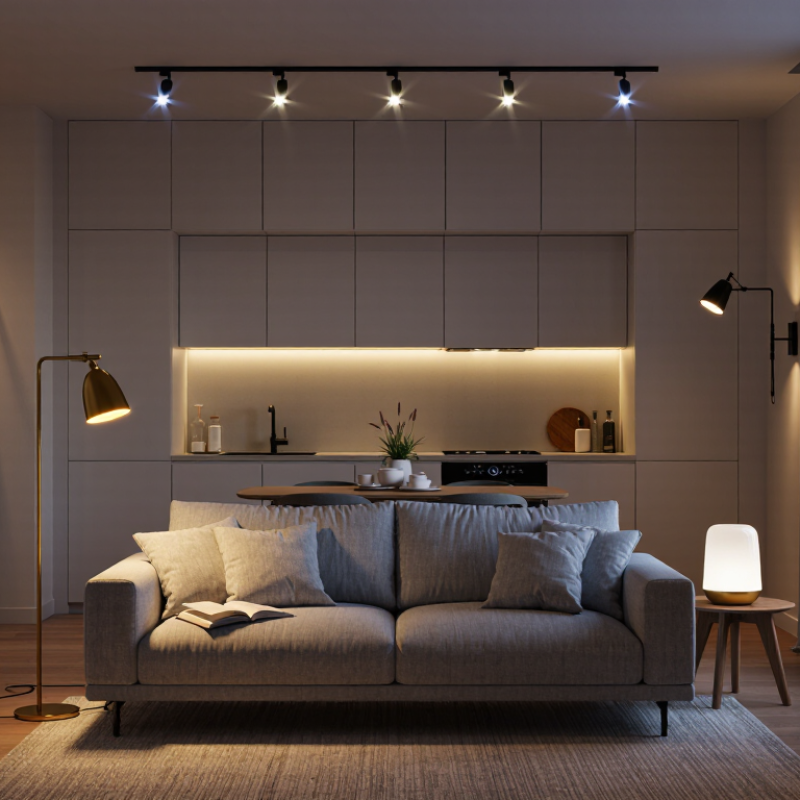
What Are the Top Types of Lighting for Apartment Living?

Understanding the Main Layers of Apartment Lighting

In apartment living, lighting works best in layers rather than as one bright ceiling fixture. Ambient lighting creates the room’s general glow through a ceiling fitting, wall light, or softly diffused floor lamp. Task lighting adds control where activities happen. A focused lamp beside a reading chair, under-cabinet lighting in a kitchen, or a desk lamp supports visual comfort during detailed work. Accent lighting shapes atmosphere. It can highlight artwork, a textured wall, or a plant without making the space feel crowded. Keep clear walkways in mind. Cords and hot bulbs should stay away from curtains and loose fabrics.

Tips: Use dimmable fixtures when possible. Place reading lights slightly behind your shoulder. Choose warm-to-neutral light for living areas, but brighter light for food preparation. Test each layer at night before fixing it permanently. I once placed a floor lamp too close to the sofa, and its glare became distracting. The position looked attractive, but it was not practical.

For renters, portable lighting offers flexibility without major alterations. A plug-in wall light can create vertical balance, while a small table lamp softens a dark corner. Mirrors may spread existing light, but they cannot replace a missing layer. Notice how the room feels at different hours. Morning light, evening shadows, and screen use all change your needs. A well-lit apartment should support movement, rest, and focused tasks without making every corner equally bright.

Using Ambient Lighting for Overall Room Illumination

Ambient lighting provides the apartment’s base layer, making rooms feel usable before task or accent lights are switched on. In a small living room, one bright ceiling fixture can create harsh shadows and glare on a television. A better approach is to spread light across the room. A ceiling fixture, floor lamp, or wall light can bounce illumination off pale walls and ceilings. That matters.

Aim for even coverage, not maximum brightness. Dimmable bulbs help adapt the room for cleaning, reading, or a quiet evening. If the ceiling fixture is fixed or unflattering, add a shaded floor lamp near a darker corner. Check the light from the sofa and doorway; a bulb that looks comfortable overhead may shine directly into your eyes from the couch. Start with layers.

Warm-white light often feels relaxed in living areas, though personal preference and wall colors affect the result. Test one bulb at dusk before changing every fixture. I find it easy to overlook how a dark rug or deep-colored wall absorbs light, so adjust gradually. A small room may need less brightness than expected, but several gentle sources usually feel more balanced than one glaring lamp.

Adding Task Lighting for Reading, Cooking, and Daily Activities

Task lighting makes apartment routines easier without flooding every room with bright overhead light. A small adjustable lamp beside the sofa can direct light onto a book while leaving the rest of the room calm. Choose a shade that hides the bulb from your usual seated position. Glare gets tiring quickly. For a desk or craft table, place the lamp opposite your writing hand to reduce shadows. The best position may take a little trial and error.

Choose a shade that hides the bulb from your usual seated position. Glare gets tiring quickly.

In the kitchen, under-cabinet lights can brighten counters where you chop vegetables or read recipe notes. If installation is difficult, a portable lamp with a stable base can help on a clear counter. Keep cords away from sinks, hot surfaces, and busy walkways. A brighter bulb is not always better; light that feels harsh can make daily tasks less comfortable. I have found that one well-placed light often helps more than several poorly aimed ones.

Tips: Sit or stand where you normally work, then check for shadows on the task. Use a warm, comfortable tone for reading, and brighter, clearer light for detailed kitchen work. Leave room to adjust the angle. A setup that looks perfect in daylight may feel wrong at night.

Enhancing Interiors with Accent and Decorative Lighting

Accent lighting gives an apartment depth without demanding extra floor space. A small adjustable lamp can wash light across a bookshelf, while a picture light makes one print feel intentional. Aim beams at surfaces, not directly at the sofa or television, to reduce glare. Warm white light often feels comfortable in the evening, especially beside wood, fabric, and muted wall colors.

Decorative lighting adds character even when switched off. A sculptural table lamp on a narrow console, or a compact pendant over a dining table, can act like a useful object and a visual focal point. In rentals, plug-in fixtures and removable hooks may avoid permanent changes, but check weight limits and keep cords clear of walkways. A dimmer helps the same corner shift from reading light to a softer evening glow.

Keep the mix modest. Two or three distinct light sources can make a small room feel layered; too many competing shapes may make it feel busy. I find this easy to overdo when a bare wall seems to need “something.” Sometimes one quiet lamp is enough. Test the placement after dark, then notice whether the light lands where you actually sit, read, or eat.

Choosing Apartment Lighting by Room, Size, and Energy Needs

Apartment lighting should follow the room’s actual tasks, not a one-fixture-per-room rule. In a narrow living area, a ceiling fixture can provide general light, while a shaded floor lamp brightens a reading chair without taking up table space. Keep the glow warm and comfortable. In kitchens, direct light over counters helps with chopping and cleaning; a small pendant alone may leave shadows. Bedrooms usually need softer ambient light and a focused bedside lamp. Small details matter. Pale walls reflect light, while dark finishes absorb more, so identical bulbs can feel surprisingly different.

Choose bulbs by lumens, not watts, and check the fixture’s size and dimmer compatibility before buying. The U.S. Department of Energy’s Energy Saver guidance says LEDs use at least 75% less energy and can last up to 25 times longer than incandescent bulbs. That can reduce replacement hassle in high ceilings or hard-to-reach fixtures. Still, the cheapest bulb is not always the best fit: color, glare, and dimming performance affect daily comfort. A practical plan is to use efficient LEDs for frequently used rooms, then add task lighting where needed rather than making every bulb brighter. It is easy to over-light a studio. Try the room at night before adding more.

Apartment Lighting: Recommended Light Levels by Room

Typical illuminance ranges for general room lighting and common task areas, measured on the relevant surface.

How to use this: Use the lower end for relaxed ambient light and the higher end for detailed tasks. Actual needs depend on room size, surface color, and daylight; layer ceiling, task, and accent lighting, and use dimmers where practical. LEDs commonly provide about 80–100 lumens per watt, so estimate input power by dividing the lumens you need by the lamp’s lumens-per-watt rating.

FAQS

What is ambient lighting used for in a small apartment?

Ambient lighting creates the room’s basic illumination. It makes the space usable before task lights are turned on. Aim for even coverage, not maximum brightness.

How can I soften harsh light from one ceiling fixture?

Add a floor lamp or wall light near a darker corner. Let light bounce off pale walls or the ceiling. One glaring source rarely feels comfortable.

Should I use dimmable bulbs in living areas?

Yes, dimmable bulbs support cleaning, reading, and quiet evenings. Test the light from the sofa and doorway. Overhead comfort can be misleading.

What light color works well in a living room?

Warm-white light often feels relaxed in living areas. Wall colors and personal preference still matter. Test one bulb at dusk before replacing everything.

How can I improve lighting beside a sofa?

Use an adjustable lamp beside the sofa. Direct its light onto the book, not your eyes. Choose a shade that hides the bulb when seated.

Where should I place a desk lamp?

Place the lamp opposite your writing hand. This can reduce shadows across notebooks and craft materials. Try different angles. The perfect position may not appear immediately.

What lighting helps with kitchen tasks?

Under-cabinet lights can brighten counters for chopping vegetables or reading recipes. A stable portable lamp may work when installation feels difficult. Keep cords away from water and heat.

Is a brighter bulb always better for detailed work?

No. Harsh brightness can cause glare and discomfort. Use clearer light for kitchen details, but keep the beam controlled. More light is not automatically better.

How should I check whether task lighting works?

Stand or sit where you normally work. Look for shadows on the task surface. Check the setup again at night. Daylight can hide problems.

Conclusion

Lighting For Apartment Living works best when it combines three main layers: ambient, task, and accent lighting. Ambient lighting provides comfortable overall illumination through ceiling fixtures, wall lights, or well-placed floor lamps. Task lighting adds focused brightness for activities such as reading, cooking, working, and getting ready, helping reduce eye strain while improving everyday convenience. Accent and decorative lighting can highlight artwork, architectural details, shelves, or cozy corners while adding personality and warmth to the interior.

The right lighting plan should reflect each room’s purpose, available space, ceiling height, and natural light. Smaller apartments benefit from slim fixtures, multipurpose lamps, and layered illumination that avoids visual clutter. Kitchens and work areas need brighter task lighting, while bedrooms and living rooms often benefit from softer, adjustable options. Energy-efficient bulbs, timers, dimmers, and smart controls can also reduce energy use and create a more flexible, comfortable home environment.

Isabella

Isabella

Isabella is a dedicated marketing professional with a sharp focus on driving brand growth and engagement through strategic content creation. With an extensive background in digital marketing, she combines her passion for storytelling with her keen understanding of industry trends to deliver......