Outdoor entertainment spaces should feel inviting after sunset, not merely bright. The right Lighting For Outdoor Entertainment Spaces guides guests safely while preserving the atmosphere of a patio, terrace, or garden. Warm light can soften stone walls, highlight planting beds, and make a dining table feel intimate. However, too much brightness quickly creates glare and weakens conversation.
This guide explores ten practical lighting ideas for outdoor gatherings. It considers layered illumination, including ambient, task, and accent lighting. You will find options such as string lights, recessed deck fixtures, wall sconces, lanterns, pathway lights, and adjustable spotlights. Each idea connects appearance with everyday performance. A light over a grill should reveal food clearly, while pathway fixtures should prevent trips without shining into guests’ eyes.
Small details matter. A 2700K to 3000K LED often creates a comfortable, residential mood. Outdoor-rated fixtures should match the space’s exposure to rain, dust, and humidity. Certified installation is also important, especially near water or permanent electrical connections. Local regulations may differ, so professional advice remains valuable.
There is no perfect formula.
A beautiful arrangement can still produce dark corners or unwanted shadows. Testing fixtures at night reveals problems that daytime planning misses. Energy use, maintenance access, and changing seasons also deserve attention. These recommendations are designed to support informed decisions, combining practical experience with dependable lighting principles. The goal is simple: create an outdoor setting where people feel comfortable staying a little longer.
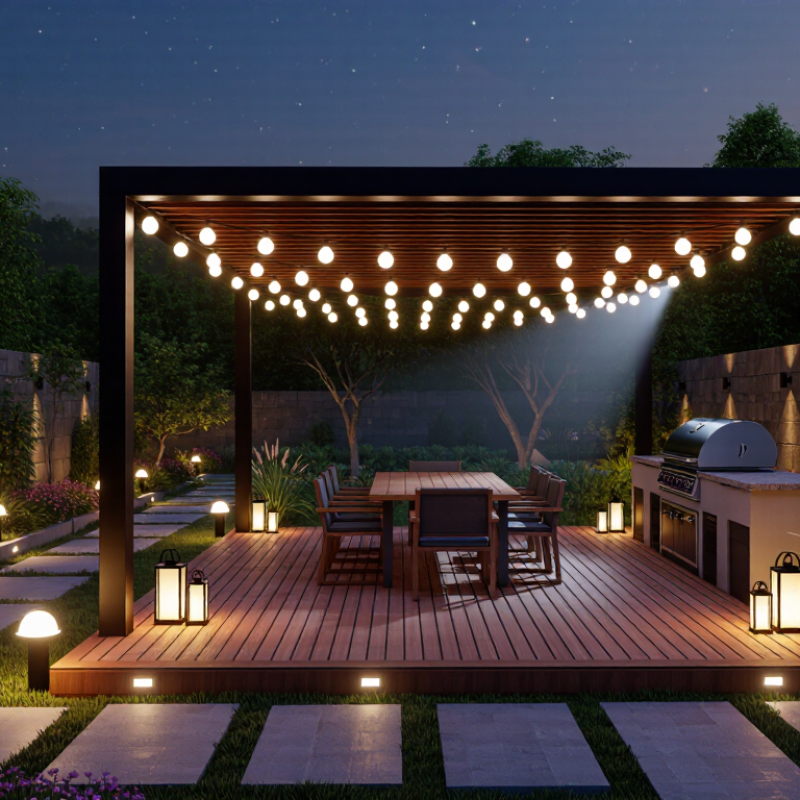
Outdoor entertainment lighting should begin with the space’s purpose, not fixture selection. A dining terrace needs clear light on plates and faces. A lounge area needs softer illumination with minimal glare. Steps, edges, and changes in level require dependable visibility.
Walk through the space after sunset. Notice where guests pause, move, and gather. I often find that daytime plans miss dark corners. That mistake is easy to make. Mark seating, serving, cooking, and circulation zones before choosing light levels. Keep brighter light near work areas while preserving darker zones for comfort and views.
Use shielded fixtures around eye level, especially near seating. Warm color temperatures can make wood and planting feel inviting, but overly warm light may reduce clarity. Test samples at night. Photos rarely show glare accurately. Choose weather-rated equipment, protected cable routes, and controls that allow separate zones.
Dimming helps when dinner becomes conversation. Motion sensors may suit pathways, but they can feel distracting beside a fire pit. Consider neighbors, wildlife, and nearby bedroom windows. I would rather begin slightly dim and adjust upward. Outdoor conditions change, and my first layout is rarely perfect. Recheck shadows after furniture moves or plants grow.
Comfortable outdoor lighting should feel natural, not theatrical. In my experience, warm light between 2200K and 3000K creates a relaxed mood. String lights can soften a pergola, while lanterns add gentle pools of light near seating. Wall sconces improve visibility without overwhelming guests. Step lights, path lights, and tree uplights help people move safely. Keep it gentle. Less glare matters.
For dining areas, use dimmable pendant lights above the table. Portable table lamps can brighten food without lighting every corner. Under-seat or under-counter lighting adds a subtle modern layer. Shielded candle-style lights bring warmth to side tables. A small fire feature can provide movement, but it should remain separated from fabrics and furniture. These ten ideas work best when combined at different heights.
Outdoor fittings should carry an appropriate weather-resistance rating. Use protected cables, secure connections, and low-voltage systems where suitable. A qualified electrician should inspect permanent wiring. Test the lighting after dark, because daytime planning can hide harsh shadows. I once placed a bright fixture directly across from a seating area; conversation became uncomfortable. Moving it higher and adding a dimmer helped, though the space still needed softer side lighting. Good design often comes from noticing what feels slightly wrong.
Top 10 Lighting Ideas for Outdoor Entertainment Spaces
Outdoor entertainment lighting works best when task and accent layers support each other. Task lighting helps guests see food, steps, cards, and serving areas. Place focused fixtures above a grill, beside a bar, and over the dining table. Add low-glare path lights near stairs and walkways. A small reading light can make a lounge chair more useful. Keep glare low.
Accent lighting shapes the atmosphere rather than demanding attention. Try uplights beneath small trees, soft wall washing, and concealed lights under benches. Lantern-style table lights can create a warm focal point. A gentle glow near a water feature adds depth. Lighting the outer edge of a patio can also make the space feel larger.
In outdoor projects, I have found that task lights are often installed too brightly. Guests squint, and the setting feels more like a work area. Dimmer controls allow better adjustment as evening changes. Use warm color temperatures for dining and social zones, while stairs need clear, even visibility. Weather-rated fixtures and protected wiring improve reliability. Still, attractive lighting does not guarantee comfort. Shadows can hide trip hazards, and decorative fixtures may become distracting in damp weather. Test the layout after sunset, then move or lower anything that catches the eye. Some plans look perfect on paper. They need revision outdoors.
| No. | Lighting Idea | Primary Lighting Type | Best Entertainment Area | Recommended Light Level | Suggested Color Temperature | Recommended Placement | Functional Benefit | Design and Safety Notes |
|---|---|---|---|---|---|---|---|---|
| 1 | Dimmable Dining-Table Pendant | Task lighting | Outdoor dining area | Approximately 100–200 lux on the tabletop | 2700–3000 K | Center the fixture above the table, positioned high enough to avoid blocking eye contact. | Provides comfortable illumination for serving food, reading menus, and dining. | Use a fixture rated for outdoor exposure and install it with suitable weatherproof wiring and a dimmer. |
| 2 | Countertop or Bar Task Lights | Task lighting | Outdoor kitchen, bar, or serving counter | Approximately 200–300 lux on work surfaces | 2700–3500 K | Install under cabinets, beneath shelves, or above the counter edge to reduce shadows. | Improves visibility for food preparation, drink service, and cleanup. | Choose sealed fixtures that are easy to clean and keep light sources shielded from direct eye level. |
| 3 | Step and Stair Lighting | Task lighting | Deck stairs, terraces, and changes in level | Approximately 50–100 lux on walking surfaces | 2700–3000 K | Mount lights on risers, side walls, or handrail posts so each tread is evenly visible. | Reduces trip hazards and helps guests move safely between entertainment zones. | Avoid glare and bright spots; use low-voltage outdoor fixtures with appropriate ingress protection. |
| 4 | Seating-Area Wall Sconces | Task and accent lighting | Patios, verandas, and covered lounges | Approximately 50–100 lux at seating level | 2700–3000 K | Place at consistent intervals on walls or columns, generally above head height. | Creates useful ambient light while defining the perimeter of the gathering space. | Use downward or shielded designs to limit glare and prevent light from shining into neighboring properties. |
| 5 | Tree and Plant Uplighting | Accent lighting | Gardens, courtyards, and landscape edges | Typically 10–50 lux on highlighted surfaces | 2700–3000 K | Place adjustable, shielded fixtures at the base of trees or large plants and aim them toward foliage. | Adds depth and visual interest without over-lighting the entire entertainment area. | Use narrow beams for trunks and wider beams for canopies; avoid aiming light directly toward seating or windows. |
| 6 | Pergola String or Festoon Lighting | Accent and ambient lighting | Pergolas, decks, patios, and informal party areas | Approximately 10–30 lux for general atmosphere | 2200–2700 K | Run evenly spaced strands along beams or overhead support cables. | Provides a relaxed social atmosphere with soft, distributed illumination. | Secure cables against wind, maintain safe clearance from combustible materials, and use outdoor-rated sockets and lamps. |
| 7 | Pathway and Perimeter Bollards | Task lighting | Walkways leading to seating, dining, or fire-pit areas | Approximately 10–50 lux on paths | 2700–3000 K | Space fixtures consistently along the path and place them where they do not obstruct walking. | Guides guests between zones and makes the overall layout easier to navigate after dark. | Select full or partial shielding to reduce glare; avoid excessive spacing that creates dark gaps. |
| 8 | Fire-Pit and Conversation Lighting | Accent lighting | Fire-pit circles and lounge seating | Approximately 20–50 lux around seating | 2200–2700 K | Use low-level lights around the perimeter rather than placing bright fixtures directly beside the fire. | Supports relaxed conversation while preserving the visual focus of the fire. | Keep electrical fixtures and cables well away from open flames and follow local clearance requirements. |
| 9 | Pool, Water Feature, or Fountain Lighting | Accent lighting | Pools, fountains, ponds, and reflective surfaces | Use controlled, low-glare illumination; avoid excessive brightness | 2700–3000 K | Place fixtures below or beside the water feature only when specifically designed and approved for that location. | Highlights movement, reflections, and water texture to create a strong evening focal point. | Use only fixtures with the required wet-location rating and have electrical work completed according to local regulations. |
| 10 | Smart Layered Lighting Controls | Task and accent lighting | Multi-zone entertainment areas | Adjustable by scene; commonly 10–300 lux depending on the activity | 2700–3000 K for warm social settings | Separate dining, cooking, pathways, seating, and landscape circuits for independent control. | Allows bright task lighting for preparation and softer accent lighting for dining or conversation. | Use timers, motion sensors, or dimmers carefully so safety lighting remains available when other zones are reduced. |
Outdoor entertainment lighting should feel inviting without creating glare. Start with warm, low-energy LED fixtures around seating areas, dining tables, and cooking zones. Use shielded wall lights, pendant fixtures, and adjustable task lights where people prepare food. Add path lights along steps and walkways. Keep them low and evenly spaced. Sudden dark patches can cause trips.
Safety depends on suitable equipment. Choose fixtures with outdoor weather-resistance ratings, sealed connections, and corrosion-resistant materials. Use low-voltage systems with protected cables and professional installation when wiring becomes complex. Place lights away from standing water. Motion sensors can illuminate entrances, while timers prevent unnecessary overnight use. Solar fixtures may help in sunny gardens, but their output can weaken after cloudy days. That detail is easy to overlook.
Layering creates better control. Combine soft overhead lighting, subtle uplights for trees, under-rail lights, and focused table illumination. Avoid pointing bright beams toward neighbors or seated guests. A simple dimmer can change the mood while reducing energy use. Test the layout after dark, not only in daylight. I have found that attractive plans sometimes leave the grill handle or last step poorly lit. Recheck those weak points. Weather, shadows, and furniture changes can expose flaws later. Keep spare lamps and inspect seals each season. Small maintenance tasks matter.
Top 10 Lighting Ideas for Outdoor Entertainment Spaces
Select lighting according to the activity, not only the garden’s appearance. For outdoor dining, use warm, adjustable light above the table. It should reveal food clearly without shining into guests’ eyes. A dimmer helps the space change from dinner to relaxed conversation. For grilling, add brighter, focused lighting near the cooking area. Keep it angled away from the cook’s face.
Games need even illumination across the play zone. Wall-mounted lights, low-glare floodlights, or overhead strings can reduce dark patches. For reading, choose a nearby lamp with a stable beam and soft brightness. Path lighting supports movement between seating, steps, and entrances. Keep fixtures low and shielded. This limits glare and preserves the night view.
A poolside gathering needs carefully positioned, weather-rated lighting. Avoid placing bright sources directly beside the water. Soft underwater illumination can create atmosphere, while deck lights mark slippery edges. During parties, layered lighting works best: ambient glow, task lighting, and gentle accents. Motion sensors suit pathways, but constant lighting may feel calmer near seating areas. I once used too many bright fixtures in a small patio. The area felt exposed, not welcoming. Test each light after sunset, then adjust its height, direction, and brightness. Outdoor conditions change, so review wiring, seals, and stability regularly.
Select the Best Lighting Ideas for Different Outdoor Activities
The chart compares typical target illuminance levels for common outdoor entertainment activities. Higher values support detailed tasks such as cooking and reading, while lower levels create comfortable ambient lighting for pathways, fire pits, and outdoor cinema areas. Actual requirements may vary according to local safety codes, fixture placement, surface reflectance, and personal preference.
Start with the space’s purpose, not the fixture style. Mark dining, cooking, seating, serving, and walking zones. Walk through the area after sunset. Dark corners often appear later.
Use warm, adjustable light that reveals food and faces clearly. Shield the source from guests’ eyes. A dimmer can shift dinner lighting toward softer conversation light.
Place focused task lighting above the grill or serving counter. Aim it away from the cook’s face. Keep the beam bright enough for knives, plates, and ingredients.
Use low, shielded lights along stairs and walkways. Keep illumination even across level changes. Clear visibility matters more than decoration here. Shadows can hide trip hazards.
Layered lighting combines ambient, task, and accent illumination. Ambient light fills the space. Task light supports activities. Accent light highlights trees, walls, benches, or water.
Choose shielded fixtures near seating areas. Use gentle wall washing, concealed bench lights, or small tree uplights. Avoid bright sources at eye level. Less can feel better.
Games need even illumination across the entire play area. Low-glare overhead or wall-mounted lights can reduce dark patches. Reading needs a nearby lamp with a stable, soft beam.
Motion sensors can work well on pathways and entrances. They may feel distracting beside a fire pit or lounge. Constant, dim lighting can feel calmer near seating.
Test every light after sunset, not only through photos or daytime plans. Check glare, shadows, brightness, wiring, seals, and stability. Move fixtures after furniture or plants change. My first layout is rarely perfect.
Designing effective Lighting For Outdoor Entertainment Spaces begins with understanding how the area will be used, whether for dining, socializing, relaxing, or hosting evening activities. A thoughtful plan combines soft ambient lighting to create a welcoming atmosphere with task lighting for practical areas such as cooking stations, dining tables, steps, and walkways. Accent lighting can also highlight architectural details, plants, seating zones, or outdoor features, adding depth and visual interest without overwhelming the space.
Safety, energy efficiency, and durability should guide every lighting decision. Choose weather-resistant fixtures, position lights to reduce glare, and ensure pathways and changes in elevation are clearly visible. Energy-saving bulbs, timers, motion sensors, and adjustable controls can improve convenience while reducing unnecessary power use. By matching lighting styles and brightness levels to different activities, homeowners can create an outdoor environment that feels comfortable, functional, secure, and enjoyable throughout the evening.
Boffo Lights