Why Is Lighting Planning for Public Spaces Important?

Time:2026-10-19 Author:Amelia
0%

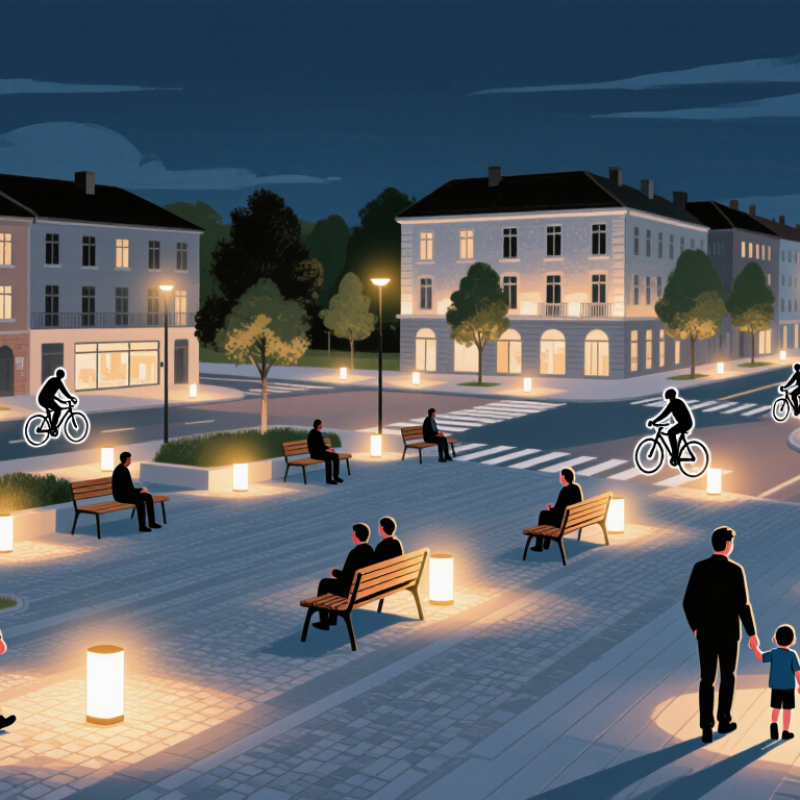
Public spaces shape how people move, meet, pause, and feel after sunset. Lighting For Public Spaces Planning makes these everyday experiences safer, clearer, and more welcoming. It is not simply about adding brighter lamps. It involves studying pedestrian routes, building edges, trees, seating, traffic, and local patterns of use.

Urbanist Jan Gehl said, “First life, then spaces, then buildings—the other way around never works.” His insight also applies to public lighting. A successful plan begins with people, not equipment. It considers a parent guiding a child across a dark plaza, an older person reading uneven pavement, or a cyclist approaching a crowded crossing. Light levels, glare control, color quality, spacing, and maintenance must work together. Small details matter.

Good planning also respects local identity and environmental responsibility. Warm, well-directed light can reveal textures without flooding nearby homes or habitats. Reliable calculations and on-site testing help designers compare visual comfort, energy use, accessibility, and long-term operating costs. Yet no plan is perfect. Weather changes perception. Tree growth alters visibility. Fixtures age, and communities use spaces in unexpected ways.

That is why professional Lighting For Public Spaces Planning should include observation, consultation, measurement, and later review. The strongest results are practical, not theatrical. People should notice the place first. Light should support it quietly, consistently, and safely. A thoughtful introduction to this subject must therefore examine both technical performance and lived experience. Both are essential.
Why Is Lighting Planning for Public Spaces Important?

Definition and Scope of Public Space Lighting Planning

Why Is Lighting Planning for Public Spaces Important?

Definition and Scope of Public Space Lighting Planning

Public space lighting planning is the structured design of light for streets, parks, plazas, transit areas, and civic entrances. It covers visibility, pedestrian comfort, accessibility, energy use, ecology, maintenance, and nighttime identity. A good plan studies movement patterns, surrounding buildings, tree canopies, weather, and local community needs. It does not mean placing brighter fixtures everywhere.

The International Energy Agency’s Energy Efficiency 2023 report states that lighting uses about 15% of global electricity. This makes efficient planning a practical climate measure. The U.S. Department of Energy reports that LED lighting uses at least 75% less energy than incandescent lighting. However, equipment alone cannot solve poor design. Glare can hide facial expressions. Wet pavement can reflect harsh light into drivers’ eyes. Dark transitions near a bright plaza can still feel unsafe. These details require on-site observation, photometric measurements, and post-installation review. No plan is perfect.

Tips: Map pedestrian routes before selecting fixtures. Set different lighting levels for paths, crossings, seating, and service areas. Use shielding to protect bedrooms and wildlife. Review color temperature carefully, especially near parks. Keep a maintenance schedule for dirty lenses, failed controls, and damaged poles. CIE guidance on outdoor lighting also supports controlling glare, upward light, and unnecessary intrusion. A useful plan should be measurable, adjustable, and open to criticism from residents and maintenance teams.

Key Functions of Lighting in Public Environments

Why Is Lighting Planning for Public Spaces Important?

Visibility comes first. In public environments, lighting helps people read signs, recognize faces, judge steps, and notice changing surfaces. The International Commission on Illumination identifies visual performance, safety, orientation, and comfort as core lighting objectives in CIE 115:2010. These functions work together, but they are not identical. A bright plaza can still produce glare, deep shadows, or confusing reflections. Good planning supports clear sightlines without making every surface excessively bright.

Lighting also shapes movement and public confidence. The World Health Organization reports about 1.19 million annual road deaths worldwide, while safer night-time visibility remains one factor in reducing travel risks. Lighting cannot prevent every collision, and claims should remain measured. It can reveal crossings, kerbs, bicycles, and obstacles earlier. The U.S. Department of Energy reports that lighting uses roughly 15% of global electricity. This makes efficient public lighting an operational responsibility, not only a design preference.

Comfort matters too. Excessive contrast can strain older eyes, and poorly shielded fixtures can disturb nearby homes or wildlife. Practical evaluations should include pedestrian observations, nighttime measurements, and feedback from different users. Our first layout is rarely perfect. A careful team revisits dark corners, glare complaints, and empty routes after installation. The best result may involve less light, better direction, and more consistent spacing.

Core Principles for Designing Public Space Lighting

Public space lighting planning shapes safety, comfort, movement, and local identity. It also affects energy demand. The International Energy Agency estimates that lighting uses about 15% of global electricity. Poorly aimed fixtures waste much of that power above roofs and into windows.

Core principles begin with purpose. Map walking routes, crossings, seating, entrances, and potential visual conflicts. Then set lighting levels according to activity, traffic, and surrounding brightness. CIE 115:2010 supports this context-based approach for road and pedestrian lighting. Uniformity matters too. A bright patch beside deep shadow can hide faces, steps, or obstacles. CIE 150:2017 also addresses obtrusive light, including glare and unwanted spill. In practice, a brighter street is not always safer. This assumption deserves more testing. Warm light may improve visual comfort, but color temperature alone cannot solve bad optics or poor placement. Dimming schedules can reduce energy use during quieter hours, yet overly aggressive dimming may weaken perceived security.

Tips: Visit the site after dark. Stand at eye level, not beside the pole. Check reflections on wet paving, shadows beneath trees, and light entering nearby homes. Use shielded luminaires, moderate contrast, and controls based on real pedestrian activity. Record complaints and maintenance faults. Plans often look perfect on paper, but public spaces change with weather, events, aging equipment, and human behavior.

Why Is Lighting Planning for Public Spaces Important? - Core Principles for Designing Public Space Lighting

Planning Dimension Recommended Planning Approach Typical Reference Values Public-Space Benefit
Safety and Visibility Provide continuous light along pedestrian routes, entrances, stairs, crossings, and changes in level. Avoid isolated bright spots surrounded by darkness. Pedestrian paths: approximately 5–10 lux average. Stairs, crossings, and conflict areas may require higher levels according to local regulations and risk assessment. Improves facial recognition, obstacle detection, orientation, and perceived personal security.
Illuminance and Uniformity Design for both average illuminance and uniform distribution. Check minimum illuminance rather than relying only on average values. A common preliminary target for pedestrian areas is Emin/Eavg of about 0.25 or higher; final values should follow the applicable lighting standard. Reduces dark patches, sudden visual adaptation, and trip hazards.
Glare Control Use shielded luminaires, suitable mounting heights, controlled optics, and carefully aimed beams. Assess glare from pedestrian and driver viewpoints. Avoid direct views of high-intensity LED sources and uncontrolled spill into homes, roads, or adjacent properties. Protects visual comfort and preserves the ability to see people, vehicles, and obstacles.
Color Temperature Select color temperature according to the space’s function, surrounding architecture, ecology, and nighttime character. Use one coordinated palette within connected areas. Approximately 2,700–3,000 K for calm, residential, and heritage settings; approximately 3,000–4,000 K where greater visual crispness is needed. Creates a coherent atmosphere while supporting visual comfort and place identity.
Color Rendering Choose light sources that render skin tones, signs, paving, vegetation, and architectural materials naturally. CRI Ra 80 or higher is a common baseline for public areas; Ra 90 or higher may be appropriate for civic, cultural, retail, or heritage environments. Supports recognition, wayfinding, photography, and visual appreciation of public spaces.
Wayfinding and Hierarchy Use brighter or more distinctive lighting at entrances, intersections, landmarks, information points, and major destinations while keeping secondary routes visually subordinate. Use contrast in level, distribution, color, or beam direction rather than excessive brightness alone. Helps people understand spatial structure and navigate intuitively after dark.
Human Scale and Comfort Combine overhead lighting with low-level or architectural lighting where appropriate. Illuminate faces and edges without creating an overlit environment. Mounting heights and spacing should be tested using photometric calculations and nighttime mock-ups. Makes spaces feel welcoming, legible, and comfortable for different age groups.
Energy Efficiency Use efficient light sources, appropriate output, dimming, scheduling, occupancy detection, and adaptive controls where suitable. Reduce output during low-use periods only when safety, accessibility, and local requirements remain satisfied. Lowers electricity consumption, operating costs, and unnecessary nighttime brightness.
Light Pollution and Ecology Direct light only where it is needed. Use full cut-off or well-shielded optics, warm light where appropriate, and reduced output near habitats. Minimize upward light, trespass, and blue-rich light near wetlands, parks, waterways, and wildlife corridors. Protects night skies, neighboring properties, wildlife behavior, and ecological systems.
Accessibility Support people with reduced vision by maintaining even transitions, highlighting ramps and hazards, and avoiding reflective glare on paving. Coordinate lighting with tactile paving, handrails, accessible routes, signs, and crossing points. Makes public spaces more usable for older adults, wheelchair users, and people with visual impairments.
Resilience and Maintenance Select robust equipment with suitable ingress protection, impact resistance, corrosion protection, replaceable components, and accessible maintenance points. Specify protection levels and materials according to exposure, climate, vandalism risk, and cleaning requirements. Maintains performance, reduces outages, and lowers whole-life costs.
Community and Context Review local history, cultural expectations, adjacent residences, mobility patterns, event schedules, and community safety concerns before finalizing the design. Use stakeholder consultation, site observations, pedestrian counts, and nighttime trials to validate the lighting concept. Creates a lighting scheme that is accepted, context-sensitive, and suited to real patterns of public use.

Note: The reference values shown are preliminary planning ranges. Final lighting levels, uniformity, glare limits, controls, and equipment specifications should be verified against applicable local regulations, accessibility requirements, road classifications, environmental conditions, and project-specific risk assessments.

Planning Steps for Safe and Effective Lighting

Why Is Lighting Planning for Public Spaces Important?

Safe public lighting begins with a careful site survey. Walk through the area at night, not only during daylight. Record dark corners, uneven paths, stairs, entrances, and nearby traffic. Start on site. Speak with pedestrians, maintenance teams, and accessibility specialists. Their observations often reveal problems that drawings miss. Measure existing light levels with calibrated equipment, then compare them with local safety and accessibility requirements. A qualified lighting professional can translate these findings into practical targets for brightness, uniformity, glare control, and color appearance.

Create a lighting plan that follows how people actually move. Place fixtures to guide pedestrians without creating harsh shadows or confusing visual patterns. Check sightlines near crossings, benches, ramps, and building entrances. Keep light away from windows and sensitive habitats where possible. Photometric software helps predict performance, but it is not a substitute for judgment. Weather, tree growth, vandalism, and changing pedestrian habits can alter results. I have seen plans perform well on paper yet feel uncomfortable after installation.

Test a small section before approving the full project. Review it at different hours and in wet conditions. Ask users whether faces are recognizable and routes feel clear. Adjust mounting height, aiming, or output when needed. Keep records of measurements and decisions. Maintenance access deserves equal attention; a difficult fixture can remain dim for months. Even a strong plan may contain assumptions worth challenging. That is why post-installation checks should remain part of the planning process.

Environmental, Social, and Economic Considerations

Why Is Lighting Planning for Public Spaces Important?

Public-space lighting affects energy use, comfort, safety, and municipal budgets. The International Energy Agency reports that lighting uses about 15% of global electricity. Efficient fixtures can reduce demand, but equipment alone cannot solve poor planning. A pathway may be technically bright, yet still leave faces unclear beneath trees. Good plans place light where people walk, wait, cross, and gather. They also control glare, spill, and unnecessary nighttime brightness.

Environmental decisions need measurable limits. The 2023 Global Lighting Challenge findings show that efficient lighting can deliver major energy savings when widely adopted. However, brighter is not always greener. Excess light disrupts nocturnal wildlife and weakens residents’ access to darkness. Timers, dimming, warmer colour temperatures, and shielded fittings can reduce these effects. We should admit a planning weakness: many projects measure installation success, not long-term ecological impact.

Social value is harder to price, but it remains visible. A well-lit bus stop can make a late journey feel less isolated. Clear illumination can help pedestrians read signs and notice hazards. The World Health Organization recorded about 1.19 million annual road deaths in its 2023 global report; lighting is only one safety factor, never a complete solution. Economically, the U.S. Department of Energy reports that LED street-light conversions can cut energy use by roughly 50% or more. Maintenance, resident feedback, and post-installation audits still matter. Otherwise, savings may look impressive on paper while public trust quietly declines.

FAQS

What is public space lighting planning?

It is the structured design of light for streets, parks, plazas, transit areas, and civic entrances. It considers safety, comfort, accessibility, energy, ecology, and maintenance. It is not simply adding brighter fixtures everywhere.

Why does lighting planning matter in public spaces?

Good planning helps people recognize faces, steps, signs, and route changes. It can reduce glare, wasted energy, and unwanted light entering homes. A bright plaza may still feel unsafe beside a dark transition.

What should a site survey examine?

Walk through the area after dark. Record dark corners, uneven paths, stairs, entrances, traffic, tree shadows, and nearby windows. Check wet paving because reflections can shine into drivers’ eyes.

How should lighting levels be selected?

Set different levels for paths, crossings, seating areas, entrances, and service zones. Consider pedestrian activity, traffic, surrounding brightness, and accessibility needs. Brighter is not always safer.

How can glare and unwanted light be controlled?

Use shielding and aim fixtures carefully. Keep light away from bedroom windows, wildlife areas, and drivers’ sightlines. Moderate contrast also matters. Harsh light can hide facial expressions.

What role do color temperature and energy efficiency play?

Warm light may feel more comfortable near homes and parks. However, color temperature cannot repair poor placement or bad optics. Efficient equipment helps reduce energy use, but design decisions remain important.

Should lighting be dimmed during quieter hours?

Dimming can reduce energy use when pedestrian activity falls. Excessive dimming may weaken perceived security. Use real movement patterns instead of fixed assumptions. Conditions change.

Why is testing a small section useful?

A trial area reveals problems before full installation. Review it at different hours and during wet weather. Ask users whether routes feel clear and faces remain recognizable.

What maintenance issues should a lighting plan include?

Include access for cleaning lenses, replacing failed controls, and repairing damaged poles. Record faults and complaints regularly. An inaccessible fixture may remain dim for months.

Why are post-installation reviews necessary?

Trees grow, weather changes, equipment ages, and pedestrian habits shift. Measure the finished space and listen to residents and maintenance teams. Plans can look excellent on paper yet feel uncomfortable in practice.

Conclusion

Lighting For Public Spaces Planning is an essential process for creating public environments that are safe, welcoming, functional, and visually coherent. It covers the assessment, design, placement, and management of lighting in streets, parks, plazas, transit areas, pathways, and other shared spaces. Effective lighting improves visibility, supports navigation, highlights important features, and encourages people to use public areas with greater confidence. It can also contribute to a stronger sense of place by reinforcing local character and making spaces feel comfortable after dark.

A successful plan begins with an understanding of users, activities, site conditions, and potential safety concerns. Designers should balance brightness, uniformity, glare control, accessibility, and nighttime visual comfort while considering energy use and maintenance needs. Environmental impacts, community preferences, long-term operating costs, and equitable access should also guide decisions. When these factors are integrated, public lighting can support social connection, reduce unnecessary energy consumption, protect nighttime surroundings, and provide lasting value for communities.

Amelia

Amelia

Amelia is a seasoned marketing professional with a wealth of expertise in our company’s core offerings. With an unwavering passion for driving growth and innovation, she plays a pivotal role in shaping our marketing strategies and enhancing brand visibility. A key aspect of her responsibilities......